Page 5 of 12
Re: Studying Go in China
Posted: Tue Jul 15, 2014 4:29 am
by Hushfield
Quite a lot happened these past few days. On Saturday we celebrated Yan Laoshi's birthday at a local restaurant. We got up at 3 am on Monday morning to watch the world cup final live (and got one more hour of sleep before getting up again for school).
Here are the two games I played today against the kids at the school.
The first one is another example of the kids at the school making pretty sick overplays. I managed to attack them using the right direction, but still lack the technique to do so in a crisp fashion. The attacks are sloppy and leave a lot of aji.
The second game I again had a lot of chances to finish the game, but missed them. This time around it was not an attack while making territory. I absolutely had to kill to win, and in the end I turned one of my completely alive groups surroundinding it into a ko. I lost the ko and the game.
I feel like I've slacked off in doing problems quite a bit in recent days. The life and death problems I am doing are not going well, which doesn't really help. I'm leaving some of the life and death books with assorted problems for a while to work through a life and death dictionary to get more focused practice on some of the shapes that are causing me problems. I have faith in the method presented by the teacher though, and believe that eventually my reading will improve.
The tesuji problems, which are more about spotting and remembering the shape, are going much better.
Tomorrow we're going to a specialized weiqi bookshop to buy books. Oh, the excitement.
Re: Studying Go in China
Posted: Thu Jul 17, 2014 7:57 am
by Hushfield
Yesterday we went to the go book store. It was actually an online shop set up in somebody's living room, which we got access to because Yan Laoshi knows the owner. We spent quite a bit of time there and I got a bunch of problem books. Most notably a series of 3 books that has a total of 3600 problems. It's divided into entry, mid and high level problems (the books use the sign for kyu, but both mid and high level are really dan material). For those that are interested:
围棋经典死活3600题(初级)
围棋经典死活3600题(中级)
围棋经典死活3600题(高级)
Note: there are 1200 problems in one book, the total series consists of 3600 problems.
In one of today's games, I got really stuck for what big point to play. Here are some of the options I considered. The answer can be found in the game review.
$$W Black to play
$$ ---------------------------------------
$$ | . . . . . . . . . . . . . . . . . . . |
$$ | . . . . . . . . . . . . . . . . . . . |
$$ | . . X . O X O O . . . . . O . O O . . |
$$ | . . X O . O X . . , . . . . . X . . . |
$$ | . . . . . . . . . . . . . . . . X . . |
$$ | . . X . . . . . . . . . . . . X O . . |
$$ | . . . . a . . . . . . . . . . . . . . |
$$ | . . . . . . . . . . . . . . . . X . . |
$$ | . . c . . . . . . . . . . . . . . . . |
$$ | . . . , . . . . . , . . . . . , . . . |
$$ | . . . . . . . . . . . . . . . . . . . |
$$ | . . X . . . . . . . . . . . . . X . . |
$$ | . . . X . . . . . . . . . . . . . . . |
$$ | . . X O O . . . . . . . . . . . O X . |
$$ | . . O X . . . . . . . b . . . . . X . |
$$ | . . O , . . . . . , . . . X X X X O . |
$$ | . . . O . . . . . . . X . O X O O O . |
$$ | . . . . . . . . . . . . . O O . . . . |
$$ | . . . . . . . . . . . . . . . . . . . |
$$ ---------------------------------------
- Click Here To Show Diagram Code
[go]$$W Black to play

$$  ---------------------------------------

$$ | . . . . . . . . . . . . . . . . . . . |

$$ | . . . . . . . . . . . . . . . . . . . |

$$ | . . X . O X O O . . . . . O . O O . . |

$$ | . . X O . O X . . , . . . . . X . . . |

$$ | . . . . . . . . . . . . . . . . X . . |

$$ | . . X . . . . . . . . . . . . X O . . |

$$ | . . . . a . . . . . . . . . . . . . . |

$$ | . . . . . . . . . . . . . . . . X . . |

$$ | . . c . . . . . . . . . . . . . . . . |

$$ | . . . , . . . . . , . . . . . , . . . |

$$ | . . . . . . . . . . . . . . . . . . . |

$$ | . . X . . . . . . . . . . . . . X . . |

$$ | . . . X . . . . . . . . . . . . . . . |

$$ | . . X O O . . . . . . . . . . . O X . |

$$ | . . O X . . . . . . . b . . . . . X . |

$$ | . . O , . . . . . , . . . X X X X O . |

$$ | . . . O . . . . . . . X . O X O O O . |

$$ | . . . . . . . . . . . . . O O . . . . |

$$ | . . . . . . . . . . . . . . . . . . . |

$$  ---------------------------------------[/go]
In the game below there was finally an instance of reading a bit ahead.
In the second game I played a terrible opening, and had absolutely no territory. I was ready to resign when Shong Feng overplayed slightly. In this game, I absolutely had to kill, and it became a fun fighting game.
Because all four of us wanted to spend some more time at the book store we went back to get some more problems and game records. We took a cab, which turned out to be really cheap in China. Think 12 CNY for the ride there.
After some more browsing and purchasing, we thought it was about time to take a taxi back and get started on those problems. How hard could it be to hail a cab, right? Right? Wrong. We came up with several theories (cab drivers dislike my beard, cab drivers don't want 4 guys in their car, cab drivers disliked my room mate's Chinese accent, cab drivers are basically trolling there would-be customers, cab drivers are all minions of Beelzebub and get paid not for the miles they drive their customers, but how insane they drive their customers), and after 40 minutes of standing in the rain with 2 umbrella's (made in China, not very waterproof) for four thoroughly soaked people, we decided to just walk home.
(* when we got home, Yan Laoshi explained that around 16:00 most cab drivers change shifts, and they have to drive back to their satanic headquarters to have the new drivers take over.)
Re: Studying Go in China
Posted: Thu Jul 17, 2014 10:41 am
by Knotwilg
Hi Hushfield
Two obvious corrections to your latest post:
1) in the problem diagram, the upper right is missing a white stone
2) in game 2, you are white
As a remark, one can indeed see in game 1 that your reading has improved. To pull off such a plan, even if the order was wrong, the calculations are not trivial (for our level).
Re: Studying Go in China
Posted: Thu Jul 17, 2014 4:05 pm
by Hushfield
Thanks for the feedback, I corrected the mistakes in the previous post.
Re: Studying Go in China
Posted: Thu Jul 17, 2014 10:46 pm
by ez4u
There is an interesting question at the end of your second game. Instead of 122 in the game what if White pushes in and cuts at 3 below? If Black sacrifices the corner are you still in the game?
$$Wc
$$ ---------------------------------------
$$ | . . . . . . . . . . . . . . . . . . . |
$$ | . . . 3 2 . . . . . . O . X . . . . . |
$$ | . X X X 1 X X O O X X O . X . X X . . |
$$ | . X O O O O O O X X O X X . O O O . . |
$$ | . O O . . . . O X O O O O . . . . . . |
$$ | . X X O . . X X X O X . . . . . . . . |
$$ | . . . O X X X . X X X X . . . . . . . |
$$ | . . O . X O X X O O O . . . . . O . . |
$$ | . . O X . O O O . . . . . . . . O X . |
$$ | . O O X . . . . . . O . . . . O X . . |
$$ | . O X X O O . X . X . . . . . O X . . |
$$ | . X O O X . O . X O O . . . . O X . . |
$$ | . X . . X . . . X . . O . . . O X . . |
$$ | . . O O . . . . . X X . . . . O O X . |
$$ | . . . . . . . . . . . O O . . . X . . |
$$ | . O . X . X . . . X . O X X . X . . . |
$$ | . . X . . . . . . . . . . . . . . . . |
$$ | . . . . . . . . . . . . . . . . . . . |
$$ | . . . . . . . . . . . . . . . . . . . |
$$ ---------------------------------------
- Click Here To Show Diagram Code
[go]$$Wc

$$  ---------------------------------------

$$ | . . . . . . . . . . . . . . . . . . . |

$$ | . . . 3 2 . . . . . . O . X . . . . . |

$$ | . X X X 1 X X O O X X O . X . X X . . |

$$ | . X O O O O O O X X O X X . O O O . . |

$$ | . O O . . . . O X O O O O . . . . . . |

$$ | . X X O . . X X X O X . . . . . . . . |

$$ | . . . O X X X . X X X X . . . . . . . |

$$ | . . O . X O X X O O O . . . . . O . . |

$$ | . . O X . O O O . . . . . . . . O X . |

$$ | . O O X . . . . . . O . . . . O X . . |

$$ | . O X X O O . X . X . . . . . O X . . |

$$ | . X O O X . O . X O O . . . . O X . . |

$$ | . X . . X . . . X . . O . . . O X . . |

$$ | . . O O . . . . . X X . . . . O O X . |

$$ | . . . . . . . . . . . O O . . . X . . |

$$ | . O . X . X . . . X . O X X . X . . . |

$$ | . . X . . . . . . . . . . . . . . . . |

$$ | . . . . . . . . . . . . . . . . . . . |

$$ | . . . . . . . . . . . . . . . . . . . |

$$  ---------------------------------------[/go]
Because if Black plays to keep the corner, White can connect the stones on the right. For example...
$$Bc
$$ ---------------------------------------
$$ | . . . . . . 0 . . 8 6 . . . . . . . . |
$$ | . . 3 O X 1 2 9 7 4 5 O . X . . . . . |
$$ | . X X X O X X O O X X O . X . X X . . |
$$ | . X O O O O O O X X O X X . O O O . . |
$$ | . O O . . . . O X O O O O . . . . . . |
$$ | . X X O . . X X X O X . . . . . . . . |
$$ | . . . O X X X . X X X X . . . . . . . |
$$ | . . O . X O X X O O O . . . . . O . . |
$$ | . . O X . O O O . . . . . . . . O X . |
$$ | . O O X . . . . . . O . . . . O X . . |
$$ | . O X X O O . X . X . . . . . O X . . |
$$ | . X O O X . O . X O O . . . . O X . . |
$$ | . X . . X . . . X . . O . . . O X . . |
$$ | . . O O . . . . . X X . . . . O O X . |
$$ | . . . . . . . . . . . O O . . . X . . |
$$ | . O . X . X . . . X . O X X . X . . . |
$$ | . . X . . . . . . . . . . . . . . . . |
$$ | . . . . . . . . . . . . . . . . . . . |
$$ | . . . . . . . . . . . . . . . . . . . |
$$ ---------------------------------------
- Click Here To Show Diagram Code
[go]$$Bc

$$  ---------------------------------------

$$ | . . . . . . 0 . . 8 6 . . . . . . . . |

$$ | . . 3 O X 1 2 9 7 4 5 O . X . . . . . |

$$ | . X X X O X X O O X X O . X . X X . . |

$$ | . X O O O O O O X X O X X . O O O . . |

$$ | . O O . . . . O X O O O O . . . . . . |

$$ | . X X O . . X X X O X . . . . . . . . |

$$ | . . . O X X X . X X X X . . . . . . . |

$$ | . . O . X O X X O O O . . . . . O . . |

$$ | . . O X . O O O . . . . . . . . O X . |

$$ | . O O X . . . . . . O . . . . O X . . |

$$ | . O X X O O . X . X . . . . . O X . . |

$$ | . X O O X . O . X O O . . . . O X . . |

$$ | . X . . X . . . X . . O . . . O X . . |

$$ | . . O O . . . . . X X . . . . O O X . |

$$ | . . . . . . . . . . . O O . . . X . . |

$$ | . O . X . X . . . X . O X X . X . . . |

$$ | . . X . . . . . . . . . . . . . . . . |

$$ | . . . . . . . . . . . . . . . . . . . |

$$ | . . . . . . . . . . . . . . . . . . . |

$$  ---------------------------------------[/go]
A little earlier, notice the effect of your 96. You force Black to make an eye. Consider what happens without the exchange of 96 for 97. After 4 below White retains the ability to eliminate Blacks eye with 5 through 7 but not necessarily right now. Black can make an eye in gote but that means he needs to make the second eye in sente, unlike in the game.
$$Wc
$$ ---------------------------------------
$$ | . . . . . . . . . . . . . . . . . . . |
$$ | . . . . . . . . . . . O . X . . . . . |
$$ | . X X X . X X O . X . O . X . X X . . |
$$ | . X O O O O O O X . . . . . O O O . . |
$$ | . O O . . . . 1 X . O . O . . . . . . |
$$ | . X X O . 7 X 2 4 3 . . . . . . . . . |
$$ | . . . O X X 5 6 X X X X . . . . . . . |
$$ | . . O . X O X X O O O . . . . . O . . |
$$ | . . O X . O O O . . . . . . . . O X . |
$$ | . . . X . . . . . . O . . . . O X . . |
$$ | . . X . . O . X . X . . . . . O X . . |
$$ | . . . O . . O . X O O . . . . O X . . |
$$ | . . . . . . . . X . . O . . . O X . . |
$$ | . . O . . . . . . X X . . . . O O X . |
$$ | . . . . . . . . . . . O O . . . X . . |
$$ | . O . X . X . . . X . O X X . X . . . |
$$ | . . X . . . . . . . . . . . . . . . . |
$$ | . . . . . . . . . . . . . . . . . . . |
$$ | . . . . . . . . . . . . . . . . . . . |
$$ ---------------------------------------
- Click Here To Show Diagram Code
[go]$$Wc

$$  ---------------------------------------

$$ | . . . . . . . . . . . . . . . . . . . |

$$ | . . . . . . . . . . . O . X . . . . . |

$$ | . X X X . X X O . X . O . X . X X . . |

$$ | . X O O O O O O X . . . . . O O O . . |

$$ | . O O . . . . 1 X . O . O . . . . . . |

$$ | . X X O . 7 X 2 4 3 . . . . . . . . . |

$$ | . . . O X X 5 6 X X X X . . . . . . . |

$$ | . . O . X O X X O O O . . . . . O . . |

$$ | . . O X . O O O . . . . . . . . O X . |

$$ | . . . X . . . . . . O . . . . O X . . |

$$ | . . X . . O . X . X . . . . . O X . . |

$$ | . . . O . . O . X O O . . . . O X . . |

$$ | . . . . . . . . X . . O . . . O X . . |

$$ | . . O . . . . . . X X . . . . O O X . |

$$ | . . . . . . . . . . . O O . . . X . . |

$$ | . O . X . X . . . X . O X X . X . . . |

$$ | . . X . . . . . . . . . . . . . . . . |

$$ | . . . . . . . . . . . . . . . . . . . |

$$ | . . . . . . . . . . . . . . . . . . . |

$$  ---------------------------------------[/go]
[edited to add coordinates]
Re: Studying Go in China
Posted: Thu Jul 17, 2014 11:42 pm
by Hushfield
Thanks for the pointers. After counting, taking the corner in the way you suggested might keep the game close enough for it to be decided in endgame. However, in the game I didn't find a way it could be done. The variation you proposed seems reasonable.
The technique you proposed for attacking the eyeshape is more refined than my in-game bulldozer tactics. I'll try to remember that for next time.
Re: Studying Go in China
Posted: Fri Jul 18, 2014 12:20 am
by Hushfield
I finally got round to taking some pictures. Every week, we spend 3 days at one school, and 3 days at another school. Below you can see what the first school (School Pink Stones) looks like.
The entrance to the school:
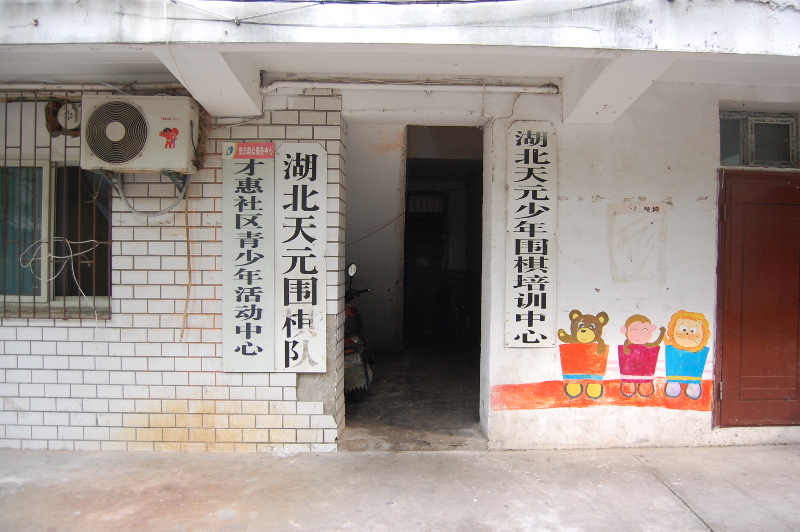
- entrance.jpg (213.91 KiB) Viewed 10701 times
The classroom used by the other group:
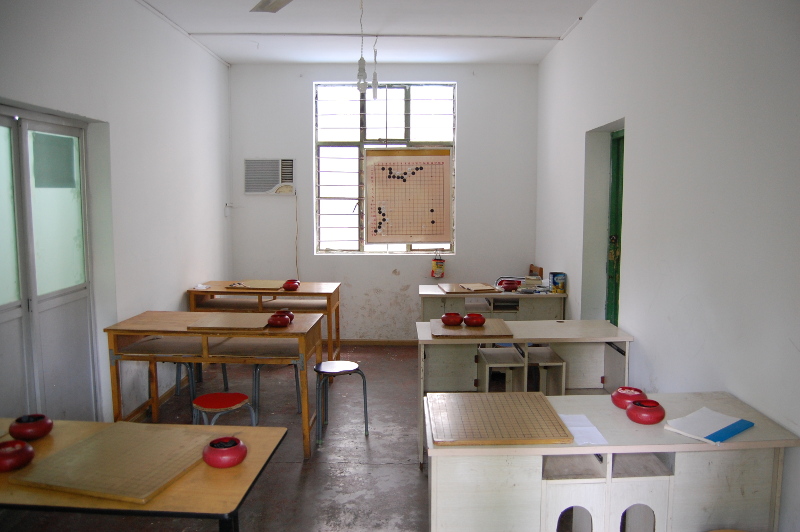
- other room.jpg (166.34 KiB) Viewed 10701 times
We start our day with joseki study. Some study a bit more diligently than others:
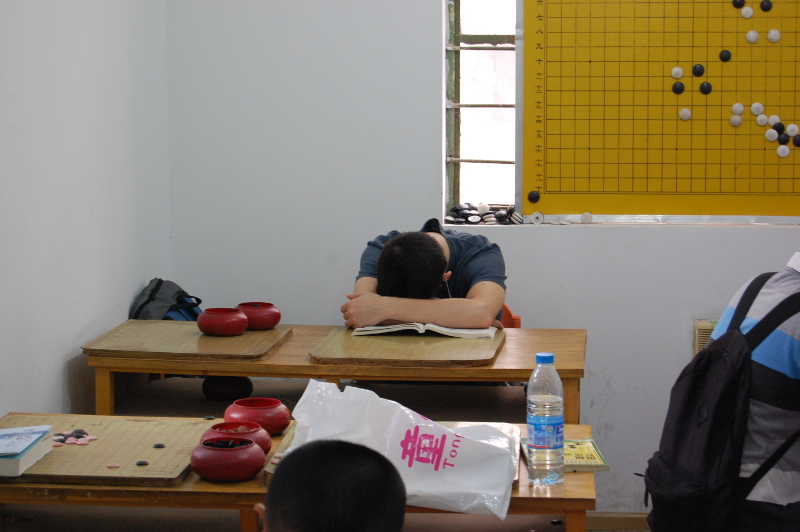
- workinghard.jpg (169.12 KiB) Viewed 10701 times
Re: Studying Go in China
Posted: Fri Jul 18, 2014 12:26 am
by Hushfield
When we're done wih joseki study (usually lasts around 1 hour), we play 1-3 games with the local pupils, and have our games reviewed by Yan Laoshi afterwards:
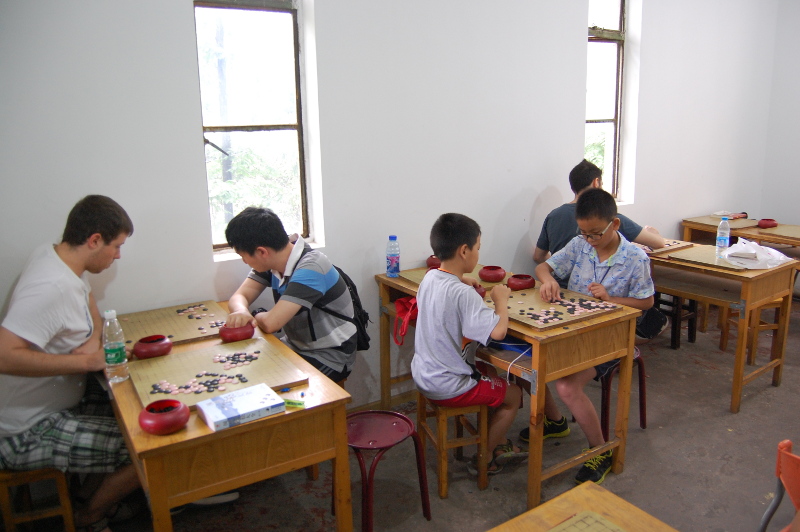
- games.jpg (187.27 KiB) Viewed 10699 times
Because the stones are usually flung about, they're made from plastic. Oh, and the white stones are pink. You can imagine the reviews: "This is not really joseki, the position is much better for pink." Or "Pink to live":
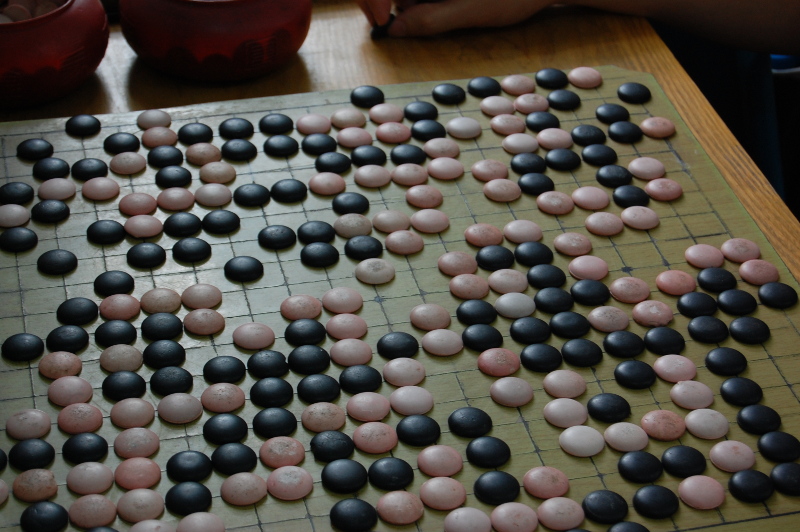
- pinkstones.jpg (224.67 KiB) Viewed 10699 times
After a certain period of time, most of the kids lose interest in playing serious games, and go about creating new games with go stones, throwing stones out of the window or kung fu kicking each other. This was taken relatively early into the mayhem that usually follows class:
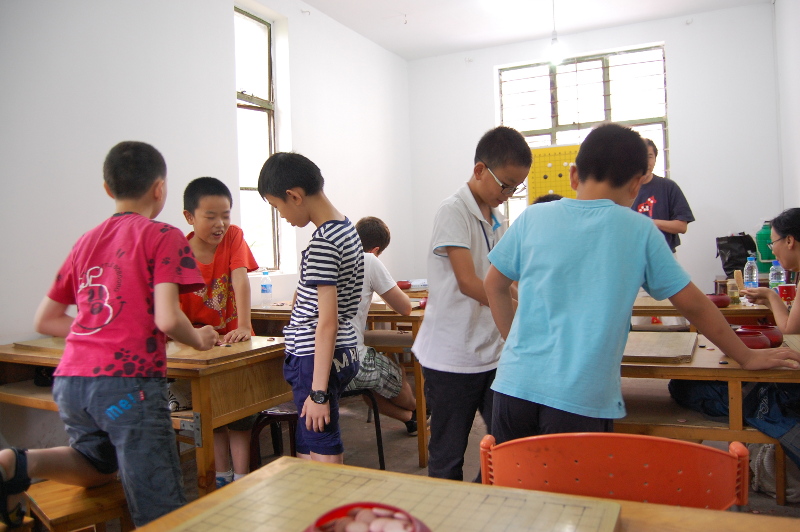
- playing.jpg (196.29 KiB) Viewed 10699 times
Re: Studying Go in China
Posted: Fri Jul 18, 2014 12:30 am
by Hushfield
We're on the second floor. There's actually quite a bit of green around the school building:
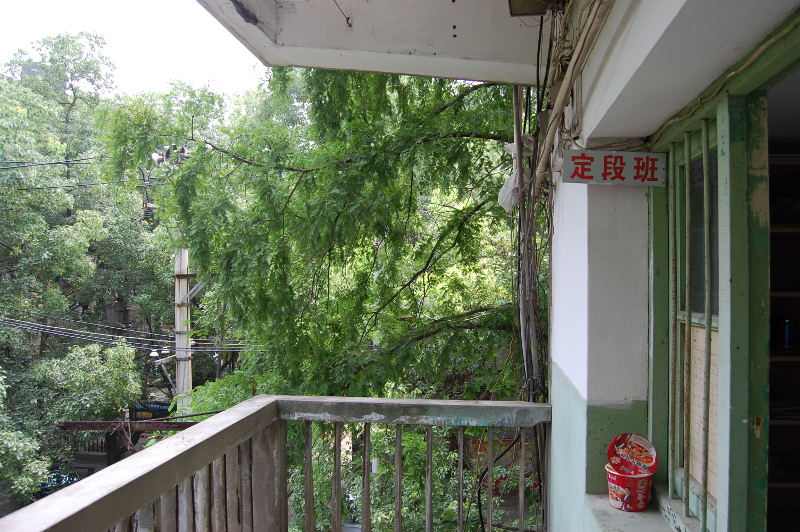
- outside.jpg (313.11 KiB) Viewed 10698 times
Oh, and people are playing weiqi here, so no honking:
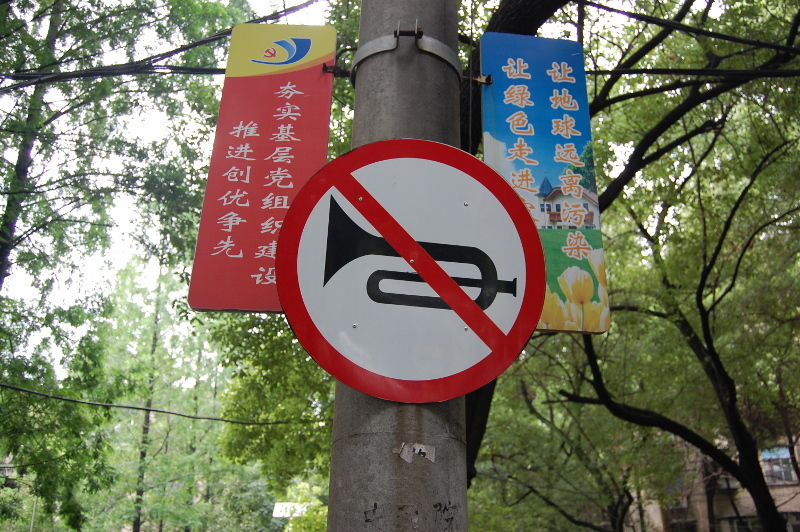
- nohonking.jpg (317.46 KiB) Viewed 10698 times
I'll take some pictures of the other school as well, and upload them in a future post.
Re: Studying Go in China
Posted: Fri Jul 18, 2014 10:31 am
by Knotwilg
Dave. i think black can foil your plan at n15
Re: Studying Go in China
Posted: Fri Jul 18, 2014 3:17 pm
by ez4u
Knotwilg wrote:Dave. i think black can foil your plan at n15
I am not sure what you mean since N15 has a white stone on it. If you mean O15, I tend to agree with you. Could you clarify your variation?
Overall I think that at the end of the game Black is hard to kill even if we can cut the connection. That said, there was more potential left than White was aware of during the game and the type of potential (arising from weaknesses in Black's overall position) is something it pays us to become more sensitive to.
Re: Studying Go in China
Posted: Sat Jul 19, 2014 8:18 am
by Knotwilg
Hi dave
O15 it is

O15-n14-o13-o16-n17
One liberty down, white must now return to the top but then black kills at o14
Re: Studying Go in China
Posted: Sat Jul 19, 2014 4:40 pm
by ez4u
Knotwilg wrote:Hi dave
O15 it is
O15-n14-o13-o16-n17
One liberty down, white must now return to the top but then black kills at o14
You are right that cutting at O16 forces White to add a stone at the top. That means White has to choose other means. However this looks complex. Can Black move out and exploit the cutting point at J11 to cut off White's center stones? Or can Black ignore the atari at 6 and connect around 8 to create a semeai in the upper right corner?
$$Bc
$$ ---------------------------------------
$$ | . . . . . . O . . O O . . . . . . . . |
$$ | . . X O X X O X X O X O . X . . . . . |
$$ | . X X X O X X O O X X O . X . X X . . |
$$ | . X O O O O O O X X O X X 7 O O O . . |
$$ | . O O . . . . O X O O O O 1 6 . . . . |
$$ | . X X O . . X X X O X . 2 4 5 9 . . . |
$$ | . . . O X X X . X X X X 0 3 8 . . . . |
$$ | . . O . X O X X O O O . . . . . O . . |
$$ | . . O X . O O O . . . . . . . . O X . |
$$ | . O O X . . . . . . O . . . . O X . . |
$$ | . O X X O O . X . X . . . . . O X . . |
$$ | . X O O X . O . X O O . . . . O X . . |
$$ | . X . . X . . . X . . O . . . O X . . |
$$ | . . O O . . . . . X X . . . . O O X . |
$$ | . . . . . . . . . . . O O . . . X . . |
$$ | . O . X . X . . . X . O X X . X . . . |
$$ | . . X . . . . . . . . . . . . . . . . |
$$ | . . . . . . . . . . . . . . . . . . . |
$$ | . . . . . . . . . . . . . . . . . . . |
$$ ---------------------------------------
- Click Here To Show Diagram Code
[go]$$Bc

$$  ---------------------------------------

$$ | . . . . . . O . . O O . . . . . . . . |

$$ | . . X O X X O X X O X O . X . . . . . |

$$ | . X X X O X X O O X X O . X . X X . . |

$$ | . X O O O O O O X X O X X 7 O O O . . |

$$ | . O O . . . . O X O O O O 1 6 . . . . |

$$ | . X X O . . X X X O X . 2 4 5 9 . . . |

$$ | . . . O X X X . X X X X 0 3 8 . . . . |

$$ | . . O . X O X X O O O . . . . . O . . |

$$ | . . O X . O O O . . . . . . . . O X . |

$$ | . O O X . . . . . . O . . . . O X . . |

$$ | . O X X O O . X . X . . . . . O X . . |

$$ | . X O O X . O . X O O . . . . O X . . |

$$ | . X . . X . . . X . . O . . . O X . . |

$$ | . . O O . . . . . X X . . . . O O X . |

$$ | . . . . . . . . . . . O O . . . X . . |

$$ | . O . X . X . . . X . O X X . X . . . |

$$ | . . X . . . . . . . . . . . . . . . . |

$$ | . . . . . . . . . . . . . . . . . . . |

$$ | . . . . . . . . . . . . . . . . . . . |

$$  ---------------------------------------[/go]
Re: Studying Go in China
Posted: Sun Jul 20, 2014 4:29 pm
by Hushfield
It's been a while since I last uploaded some games. I'm playing slightly stronger opponents now, and dropped the 2 handicap stones against the mid-level kids. This is good practice and quite humbling, as one or two wrong or slow moves mean dead groups. Below you can find two of those massacres. The first is a game with a bad opening for me, the second one, with a good opening.
These are just two games, but I've played many more and lost about all of them, except for the games against Andy, a beginner. The concept of beginner is really weird for European standards, by the way. His direction of play and evaluation of the value of moves is almost non-existent. However, he can read quite well, and will not let you get away with overplays inside his sphere of influence. Although he sometimes still misses sneaky moves that cut off some of his stones, I would say his reading is much, much better than most European beginners. I think the study regimen is mostly responsible for this: he plays less than the other kids, and has to do many more problems. I would love to post a game with him, but alas, still cannot remember the games I played with him.
I think one of the main reasons the games are getting worse, is that I'm playing a bit faster. I'll focus on taking enough time to think about each move again, and force myself to read ahead, even with moves that seem no-brainers. Probably, I should read ahead especially in those cases.
On the plus side, the problems are going better and better. I've done 1298 problems since I got here 17 days ago. That averages to about 76 problems per day, which is well below the standard of 100 problems a day the students set themselves here. I'll work even harder at life and death in the coming days, but am enjoying the problems more and more. The book I'm currently working through is:
围棋经典死活3600题(初级)
The problems are for the most part rather easy, but they manage to really drill home certain tesuji for life and death, that speeds up the recognition in reading.
Re: Studying Go in China
Posted: Mon Jul 21, 2014 12:12 am
by Hushfield
Below you can find some pictures of the other school we go to. It's a bit fancier than School Pink Stones. Because it's on the 7th floor, we do quite a bit of stairs every day.
The entrance to the school:
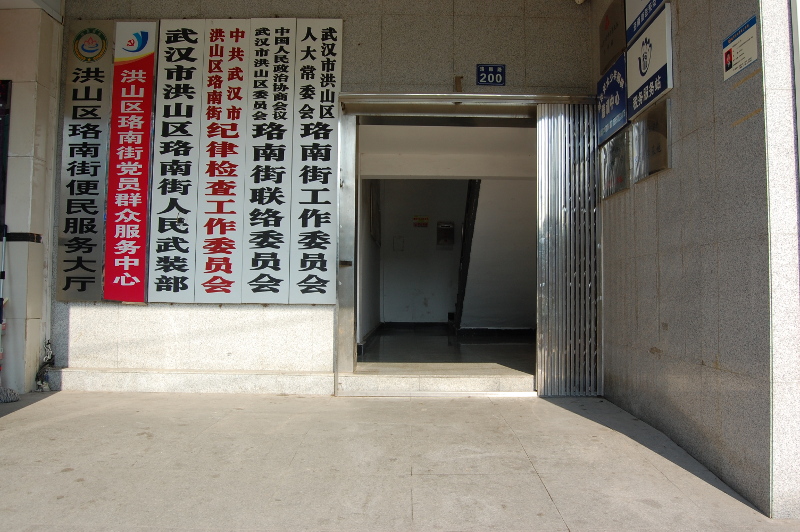
- entrance.jpg (249.9 KiB) Viewed 10128 times
The schedule is the same as in the other school. We start with 60-90 minutes of joseki study:
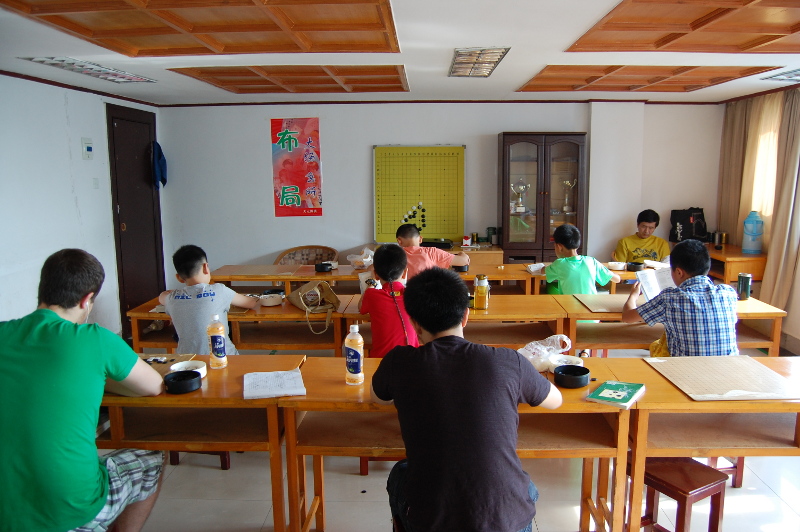
- josekistudy.jpg (225.25 KiB) Viewed 10128 times
Then we play a few games, and have them reviewed by Yan Laoshi afterwards:
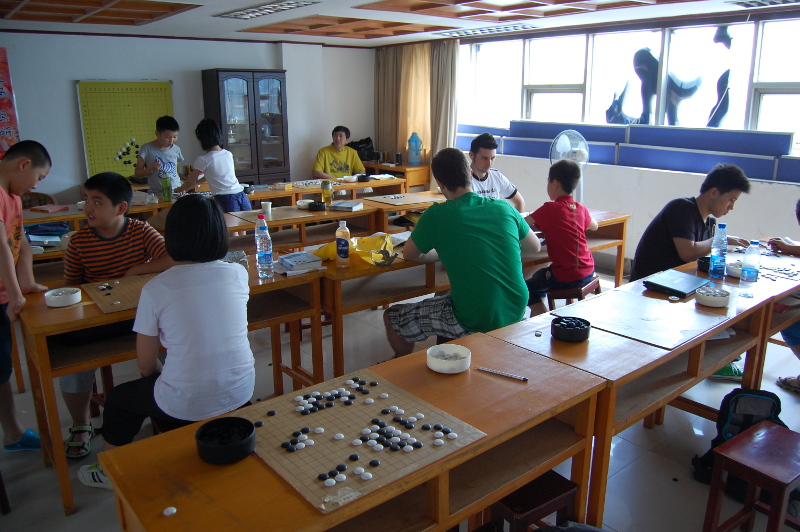
- games.jpg (245.89 KiB) Viewed 10128 times