Introducing The Real City League
Posted: Tue Jun 20, 2017 11:01 am
We have called the China Weiqi League the Chinese Cities League before. But in China there is actually a Weiqi League that has City in its official name: the City Weiqi League, or CWL. Here is their official website: http://www.cwlchina.com/. It is a relatively new but extremely fun league. It will start its 3rd iteration at the end of June with 8 new teams joining this year so I thought now is a perfect time to introduce it to western Go community.
To distinguish the two leagues let me call the China Weiqi A-League WAL. These are two completely different leagues in so many ways, even though quite a few players (Chen Yaoye, Tuo Jiaxi, Zhou Ruiyang, Shi Yue, Tang Weixing etc.) are present in both leagues. I will try to describe what the CWL is and pointing out the differences along the way.
1. Unlike the WAL, the CWL is a purely commercial product, operated by a private company called Huazhi CWL Sporting LLC (华智城围联体育产业股份公司). The official China Weiqi Association only issue guidelines for the CWL but does not interfere with its operation or play any role in its administration.
2. The organization of CWL is modeled on the NBA. This year there will be 32 teams playing in CWL, divided into A,B,C,D 4 divisions. The regular season starts in June and ends in September. Each team plays one home game and one away game against every other team in its division, so there will be total 14 rounds in the regular season. The top 4 of each division advance to post season. The 16 teams then play a one game knock out round according to regular season seeding. After that it's best of 3 all the way to the final to decide the champion.
3. One big difference decidedly different from traditional Go, is that CWL Go is a spectator game. We are not talking about watching on TV commentators or following games on Go servers. We are talking about hundreds even thousands of fans inside the arena, watching and CHEERING! Yes, rules allow cheer leaders and audience cheering for teams! Just not overly so. Usually it is accompanied by famous pros commenting on a large board (often huge LCD board) and even some interaction with audience.
4. Game format. This is arguably the biggest difference between CWL and WAL or other traditional Go. CWL uses team relaying format. A game is separated into 3 stages: Opening (move 1-60), Mid-game (move 61-141), Endgame (move 142-finish). At the transition point of each stage, team must substitute a new player (this is called Mandatory Substitution). Any player substituted out can not come back in, but can join the rest of team to discuss the game. The coach and the playing team member can call up to 3 technical time out. Each team is also entitled to 3 technical substitution. So you need at least 3 players to finish a game and can use up to 6 players in one game.
5. To avoid competing and drawing two much resource away from WAL, top 70 players in official CWA ranking cannot be a playing member during regular season (many serve as coaches) and only one for each team is allowed to play in the post season, unless the player is older than 35. So if you are old and still playing well you are more valuable to the teams.
6. For Korean team(s), the above restriction is modified to top 35 in official KBA ranking.
And yes, there are international teams in the CWL! In fact Seoul is the reigning champion because there was no restriction for international teams last year and they sent out the likes of Lee Yeongkyu, Shin Jinseo, Shin Minjun etc and won the final 2-1 against Beijing.
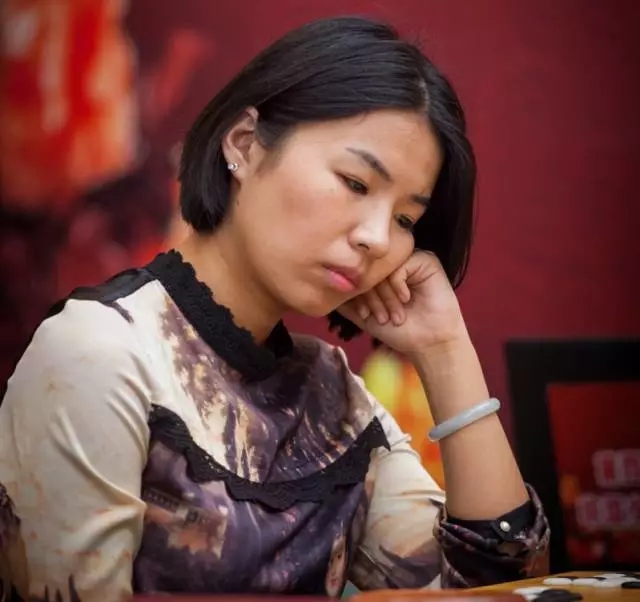
7. To make the matches more entertaining, last year there was requirement of at least one female playing member, one local amateur playing member for each team. My guess is this is still in effect. It seems international teams need to follow the female player rule but not the amateur player rule.
To distinguish the two leagues let me call the China Weiqi A-League WAL. These are two completely different leagues in so many ways, even though quite a few players (Chen Yaoye, Tuo Jiaxi, Zhou Ruiyang, Shi Yue, Tang Weixing etc.) are present in both leagues. I will try to describe what the CWL is and pointing out the differences along the way.
1. Unlike the WAL, the CWL is a purely commercial product, operated by a private company called Huazhi CWL Sporting LLC (华智城围联体育产业股份公司). The official China Weiqi Association only issue guidelines for the CWL but does not interfere with its operation or play any role in its administration.
2. The organization of CWL is modeled on the NBA. This year there will be 32 teams playing in CWL, divided into A,B,C,D 4 divisions. The regular season starts in June and ends in September. Each team plays one home game and one away game against every other team in its division, so there will be total 14 rounds in the regular season. The top 4 of each division advance to post season. The 16 teams then play a one game knock out round according to regular season seeding. After that it's best of 3 all the way to the final to decide the champion.
3. One big difference decidedly different from traditional Go, is that CWL Go is a spectator game. We are not talking about watching on TV commentators or following games on Go servers. We are talking about hundreds even thousands of fans inside the arena, watching and CHEERING! Yes, rules allow cheer leaders and audience cheering for teams! Just not overly so. Usually it is accompanied by famous pros commenting on a large board (often huge LCD board) and even some interaction with audience.
4. Game format. This is arguably the biggest difference between CWL and WAL or other traditional Go. CWL uses team relaying format. A game is separated into 3 stages: Opening (move 1-60), Mid-game (move 61-141), Endgame (move 142-finish). At the transition point of each stage, team must substitute a new player (this is called Mandatory Substitution). Any player substituted out can not come back in, but can join the rest of team to discuss the game. The coach and the playing team member can call up to 3 technical time out. Each team is also entitled to 3 technical substitution. So you need at least 3 players to finish a game and can use up to 6 players in one game.
5. To avoid competing and drawing two much resource away from WAL, top 70 players in official CWA ranking cannot be a playing member during regular season (many serve as coaches) and only one for each team is allowed to play in the post season, unless the player is older than 35. So if you are old and still playing well you are more valuable to the teams.
6. For Korean team(s), the above restriction is modified to top 35 in official KBA ranking.
And yes, there are international teams in the CWL! In fact Seoul is the reigning champion because there was no restriction for international teams last year and they sent out the likes of Lee Yeongkyu, Shin Jinseo, Shin Minjun etc and won the final 2-1 against Beijing.
7. To make the matches more entertaining, last year there was requirement of at least one female playing member, one local amateur playing member for each team. My guess is this is still in effect. It seems international teams need to follow the female player rule but not the amateur player rule.