Certainly, if you feel flummoxed after a game by a certain corner exchange, your first instinct should be to ask a stronger player to review it with you and your second instinct should be to consult a joseki dictionary to get some ideas.illluck wrote:I have to disagree with oren. There's really no need to reinvent the wheel and remember inferior sequences- at least look up the most common situations (e.g. sansna invasion into just the 4-4, into 4-4 with keima, into 4-4 with ogeima). A lot of the shapes and sequences in those situations are also applicable in other places.
But "learning joseki", if that means "memorizing joseki", isn't horribly productive if your sense of life and death, shape, endgame, reading, etc. isn't strong enough to understand why you're playing the moves you memorized. If your opponent deviates, you're helpless. If the situation on the board is slightly different, you're helpless. Later in the game when you want to press your advantage or defend locally, you're helpless.
In other words, so long as his opponents can't kill that invasion, he should focus on continuing to improve his L&D. Once they are killing it consistently, then he could learn the ko sequence by heart, but he could also keep studying L&D - at a certain point, you don't have to "memorize" that sequence, it just makes so much sense that seeing it once is good.
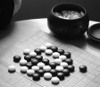

 , for example; W's high stone at K16 is begging to be finished off with a low stone at O17 (which is already a big approach, isn't it?), so this is a big move for either player. Because W is so high, even after he plays O17 you can try strong-arm tactics like the H17 invasion; but of course, this will just transfer W's strength from the top side to the center.