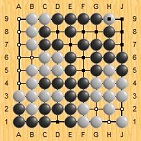
I think this game is a good example of why just knowing good and bad moves is not everything in Go. It's also a game of spirits, answering the question of who is better at forcing the other one to his will. This guy didn't have to struggle once, because you never questioned his plan. You always followed nicely, taking small locally good moves and let him have his way. That's not a way to win.
Look at the following advice from Bill Spight:
$$Wc
$$ ---------------------------------------
$$ | . . . . . . . . . . . . . . . . . . . |
$$ | . . . . . . . . . . . . . . . . . . . |
$$ | . . . . . . . . . . . . . O . . . . . |
$$ | . . . O . . . . . , . . . . . X . . . |
$$ | . . . . . . . . . . . . . . . . . . . |
$$ | . . . . . . . . . . . . 1 . . X . . . |
$$ | . . . . . . . . . . . . . . . . . . . |
$$ | . . . . . . . . . . . . . . . . . . . |
$$ | . . . . . . . . . . . . . . . . . . . |
$$ | . . . , . . . . . , . . . . . , X . . |
$$ | . . . . . . . . . . . . . . . . . . . |
$$ | . . . . . . . . . . . . . . . . . . . |
$$ | . . . . . . . . . . . . . . . . . . . |
$$ | . . O . . . . . . . . . . . . . O . . |
$$ | . . . . . . . . . . . . X . . . X X . |
$$ | . . . O . . . . . X . . . . X X X O . |
$$ | . . . . . X . . . . . . . O . O O O . |
$$ | . . . . . . . . . . . . . . . . . . . |
$$ | . . . . . . . . . . . . . . . . . . . |
$$ ---------------------------------------
- Click Here To Show Diagram Code
[go]$$Wc

$$ ---------------------------------------

$$ | . . . . . . . . . . . . . . . . . . . |

$$ | . . . . . . . . . . . . . . . . . . . |

$$ | . . . . . . . . . . . . . O . . . . . |

$$ | . . . O . . . . . , . . . . . X . . . |

$$ | . . . . . . . . . . . . . . . . . . . |

$$ | . . . . . . . . . . . . 1 . . X . . . |

$$ | . . . . . . . . . . . . . . . . . . . |

$$ | . . . . . . . . . . . . . . . . . . . |

$$ | . . . . . . . . . . . . . . . . . . . |

$$ | . . . , . . . . . , . . . . . , X . . |

$$ | . . . . . . . . . . . . . . . . . . . |

$$ | . . . . . . . . . . . . . . . . . . . |

$$ | . . . . . . . . . . . . . . . . . . . |

$$ | . . O . . . . . . . . . . . . . O . . |

$$ | . . . . . . . . . . . . X . . . X X . |

$$ | . . . O . . . . . X . . . . X X X O . |

$$ | . . . . . X . . . . . . . O . O O O . |

$$ | . . . . . . . . . . . . . . . . . . . |

$$ | . . . . . . . . . . . . . . . . . . . |

$$ ---------------------------------------[/go]
It is probably not the best move and you won't find much about it in any Go book or database, but it shows exactly the spirit needed! Black wants to build a moyo, so what can you do to stop him?
Have you ever played such kind of move? Even though it looks wrong and feels scary, just to punch the other one in his ugly face (not literally, of course

). Well, maybe you can give it a try. Probably you won't just see an improvement in game but also an improvement in excitement, because of the higher risk involved and that special feeling if you develop a tactic that is yours and not just taken from a book.
------------------------------------------------------------------
And to also discuss a little about the moves, I don't think K16 was a mistake. Actually I'm quite sure it isn't, even though I'm many ranks lower then most other participants in the discussion. The reason for my strong believe is that I read about this corner position just some days ago:
$$Bc
$$ ---------------------------------------
$$ | . . . . . . . . . . . . . . . . . . . |
$$ | . . . . . . . . . . . . . . . . . . . |
$$ | . . . . . . . . . . . a . O . . e . . |
$$ | . . . O . . . . . O . . . . . X . . . |
$$ | . . . . . . . . . . . . d b . . . . . |
$$ | . . . . . . . . . . . . . . . X . . . |
$$ | . . . . . . . . . . . . . c . . . . . |
$$ | . . . . . . . . . . . . . . . . . . . |
$$ | . . . . . . . . . . . . . . . . . . . |
$$ | . . . , . . . . . , . . . . . , X . . |
- Click Here To Show Diagram Code
[go]$$Bc

$$ ---------------------------------------

$$ | . . . . . . . . . . . . . . . . . . . |

$$ | . . . . . . . . . . . . . . . . . . . |

$$ | . . . . . . . . . . . a . O . . e . . |

$$ | . . . O . . . . . O . . . . . X . . . |

$$ | . . . . . . . . . . . . d b . . . . . |

$$ | . . . . . . . . . . . . . . . X . . . |

$$ | . . . . . . . . . . . . . c . . . . . |

$$ | . . . . . . . . . . . . . . . . . . . |

$$ | . . . . . . . . . . . . . . . . . . . |

$$ | . . . , . . . . . , . . . . . , X . . |[/go]
What I understood is this: a is a very big invasion for black, sometimes it's so big that he should play it imidiately after the joseki. White on the other hand really want's to play at b to increase his top side moyo and protect a. The extension at b can be stopped with c, though, which itself is a very, very good extension of his right side moyo for black, if he has one (like in the game). So Black really likes a and he really likes c and in some regard he also likes to protect the corner at some point. But what he really doesn't like is to play around b...
$$Bc a suboptimal play by black
$$ ---------------------------------------
$$ | . . . . . . . . . . . . . . . . . . . |
$$ | . . . . . . . . . . . . . . . . . . . |
$$ | . . . . . . . . . . . a . @ . . b . . |
$$ | . . . O . . . . . O . . . . . X . . . |
$$ | . . . . . . . . . . . . . 1 . . . . . |
$$ | . . . . . . . . . . . . . . . # . . . |
$$ | . . . . . . . . . . . . . . . . . . . |
$$ | . . . . . . . . . . . . . . . . . . . |
$$ | . . . . . . . . . . . . . . . . . . . |
$$ | . . . , . . . . . , . . . . . , . . . |
- Click Here To Show Diagram Code
[go]$$Bc a suboptimal play by black

$$ ---------------------------------------

$$ | . . . . . . . . . . . . . . . . . . . |

$$ | . . . . . . . . . . . . . . . . . . . |

$$ | . . . . . . . . . . . a . @ . . b . . |

$$ | . . . O . . . . . O . . . . . X . . . |

$$ | . . . . . . . . . . . . . 1 . . . . . |

$$ | . . . . . . . . . . . . . . . # . . . |

$$ | . . . . . . . . . . . . . . . . . . . |

$$ | . . . . . . . . . . . . . . . . . . . |

$$ | . . . . . . . . . . . . . . . . . . . |

$$ | . . . , . . . . . , . . . . . , . . . |[/go]
The thing is that 1 doesn't really help with a, in fact it often leads white to defend a in some way (what happened in the game), destroying a really awesome invasion for black. Also it doesn't protect the corner very well. So even if White doesn't respond directly (which I would suggest in the game) a is not so great anymore, because the marked white stone is not dead yet and with 1 and a we already invested 2 stones to get the value of one move. White can still invade the corner, right? Last but not least 1 and the marked black stone don't work so well together. It seems so inefficient to have both on the board. Extending out one more is even worse I'd figure, because it gives white some additional cutting aji and thus maybe a way into the moyo.
So this was the theory as I learned it from various books, online articles and youtube videos over the last couple of days. Correct me, if anything's wrong. Anyway, concluding from this I'd say, that K16 was well played and white's continuation on N15 was actually a mistake. It just doesn't look so wrong, because in the game white simply obeys instead of starting to fight or invade and white's answer might've even looked relatively big and urgent locally.
$$Bc a suboptimal play by black
$$ ---------------------------------------
$$ | . . . . . . . . . . . . . . . . . . . |
$$ | . . . . . . . . . . . . . . . . . . . |
$$ | . . . . . . . . . . . c . O . . d . . |
$$ | . . . O . . . . . O . . . . . X . . . |
$$ | . . . . . . . . . . . . 1 a . . . . . |
$$ | . . . . . . . . . . . . . . . X . . . |
$$ | . . . . . . . . . . . . . . . . . . . |
$$ | . . . . . . . . . . . . . . . . . . . |
$$ | . . . . . . . . . . . . . . . . . . . |
$$ | . . . , . . . . . , . . . . b , X . . |
- Click Here To Show Diagram Code
[go]$$Bc a suboptimal play by black

$$ ---------------------------------------

$$ | . . . . . . . . . . . . . . . . . . . |

$$ | . . . . . . . . . . . . . . . . . . . |

$$ | . . . . . . . . . . . c . O . . d . . |

$$ | . . . O . . . . . O . . . . . X . . . |

$$ | . . . . . . . . . . . . 1 a . . . . . |

$$ | . . . . . . . . . . . . . . . X . . . |

$$ | . . . . . . . . . . . . . . . . . . . |

$$ | . . . . . . . . . . . . . . . . . . . |

$$ | . . . . . . . . . . . . . . . . . . . |

$$ | . . . , . . . . . , . . . . b , X . . |[/go]
So I'd suggest white leaves the joseki intact but instead of bowing his head to 1 he starts to fight with a or invades at b, hoping to use the weakness at a as aji to help his invasion. To some degree moves around c and d are miai in my eyes, so they can be played later on, with c being a little better if white has some thickness showing towards the top side (e.g. from the top-left corner) and d being a little better if black gets a stable group on the top side.
For black instead of 1 I'd say:
$$Bc
$$ ---------------------------------------
$$ | . . . . . . . . . . . . . . . . . . . |
$$ | . . . . . . . . . . . . . . . . . . . |
$$ | . . . . . . . . . . . . . O . . . . . |
$$ | . . . O . . . . . O . . . . . X . . . |
$$ | . . . . . . . . . . . . . c . . . . . |
$$ | . . b . . . . . . . . . . . . X . . . |
$$ | . . . . . . . . . . . . . d . . . . . |
$$ | . . . . . . . . . . . . . . . . . . . |
$$ | . . . . . . . . . . . . . . . . . . . |
$$ | . . . , . . . . . , . . . . a , X . . |
$$ | . . . . . . . . . . . . . . . . . . . |
$$ | . . . . . . . . . . . . . . . . . . . |
$$ | . . . . . . . . . . . . . . . . . . . |
$$ | . . O . . . . . . . . . . . . . O . . |
$$ | . . . . . . . . . . . . X . . . X X . |
$$ | . . . O . . . . . X . . . . X X X O . |
$$ | . . . . . X . . . . . . . O . O O O . |
$$ | . . . . . . . . . . . . . . . . . . . |
$$ | . . . . . . . . . . . . . . . . . . . |
$$ ---------------------------------------
- Click Here To Show Diagram Code
[go]$$Bc

$$ ---------------------------------------

$$ | . . . . . . . . . . . . . . . . . . . |

$$ | . . . . . . . . . . . . . . . . . . . |

$$ | . . . . . . . . . . . . . O . . . . . |

$$ | . . . O . . . . . O . . . . . X . . . |

$$ | . . . . . . . . . . . . . c . . . . . |

$$ | . . b . . . . . . . . . . . . X . . . |

$$ | . . . . . . . . . . . . . d . . . . . |

$$ | . . . . . . . . . . . . . . . . . . . |

$$ | . . . . . . . . . . . . . . . . . . . |

$$ | . . . , . . . . . , . . . . a , X . . |

$$ | . . . . . . . . . . . . . . . . . . . |

$$ | . . . . . . . . . . . . . . . . . . . |

$$ | . . . . . . . . . . . . . . . . . . . |

$$ | . . O . . . . . . . . . . . . . O . . |

$$ | . . . . . . . . . . . . X . . . X X . |

$$ | . . . O . . . . . X . . . . X X X O . |

$$ | . . . . . X . . . . . . . O . O O O . |

$$ | . . . . . . . . . . . . . . . . . . . |

$$ | . . . . . . . . . . . . . . . . . . . |

$$ ---------------------------------------[/go]
Black shouldn't play N15, but either remove the big weakness at a or play on the wide open side with b. He shouldn't worry so much about c, because his response at d will be the perfect continuation of his moyo and his is just bigger (yes, size matters
).
I'd prefer b slightly, because 'a' somehow feels a little slow.