I like my hypothesis more.palapiku wrote:Another hypothesis: Strong players enjoy the game itself so the equipment does not matter to them. Weak players buy expensive equipment to justify to themselves that they are serious about the game and not simply wasting their time on something they are not good at.lemmata wrote:One hypothesis: The people who can afford expensive equipment are probably 1) older and 2) must work hard to earn a level of income that can justify such a purchase. Age is negatively correlated with strength. Amount of work is negatively correlated with free time for study. Therefore the amount of work is negatively correlated with strength. However, this does not indicate a causal relationship in any direction between strength and possession of nice equipment.
 It assumes nicer things about people than your hypothesis. Happy thoughts.
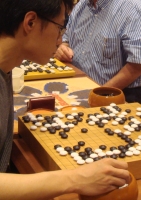
On a more serious note, some people regard playing go as a cultural and artistic experience (in addition to being an entertaining competitive intellectual exercise). Consider the Japanese art of tea ceremony and the joy people get from using and admiring the fine pieces of equipment involved in that cultural experience. It would seem that the most important part of such an activity should be the tea. The fine equipment enhances rather than detracts from the experience. One might say that there is zen in the gestalt.
I am sure that some people who buy nice equipment are, as you suggest, more interested in appearing to be interested in go than they are in go. However, I would like to believe that most are simply interested in the cultural/artistic facets of go in addition to (rather than instead of) the game itself. Appreciation for fine craftsmanship is no sin. As is often the case with art, the joy one gets out of fine equipment is highly subjective. I would not accuse you of lacking appreciation for culture if you did not particularly like nice boards. I would just assume that your aesthetic values are different from mine.
Go is not solely the domain of strong players. All are worthy of enjoying its virtues in whichever way they choose. Hopefully, many will do so, especially if go is to survive as a viable industry into the next century.

 Or they tended to learn younger when they had little disposable income, as opposed to later when they had little disposable time. (See Araban's comment in the "one word for good go" thread)