https://twitter.com/mbcnews/status/709557327616024576

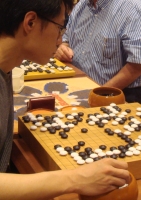
paraphrased from article wrote:The KBA originally prepared a certificate written in old style Korean (mixed hangul and hanja), but later decided to make it in modern style Korean (hangul only) and English.

What a such a terrible translation (am I right with the grammar?) done by the Yonhap News English website team. No official document in Korea is ever written in "Chinese". It may use some Chinese characters for Chinese loanwords, but that is not "Chinese".yoyoma wrote:http://english.yonhapnews.co.kr/news/2016/03/15/16/0200000000AEN20160315003251315F.html?338f83c0
The KBA originally prepared a certificate written in Chinese, but later decided to make it in Korean and English.
As a Chinese person, I can read that mostly with the exception of a couple of characters. From what I understand, Hangul wasn't the official language until after the Japanese occupation which is during WW II so I presume before that (e.g. around 90 years ago) official documents were all in Chinese?MinjaeKim wrote:What a such a terrible translation (am I right with the grammar?) done by the Yonhap News English website team. No official document in Korea is ever written in "Chinese". It may use some Chinese characters for Chinese loanwords, but that is not "Chinese".yoyoma wrote:http://english.yonhapnews.co.kr/news/2016/03/15/16/0200000000AEN20160315003251315F.html?338f83c0
The KBA originally prepared a certificate written in Chinese, but later decided to make it in Korean and English.
illluck wrote: As a Chinese person, I can read that mostly with the exception of a couple of characters. From what I understand, Hangul wasn't the official language until after the Japanese occupation which is during WW II so I presume before that (e.g. around 90 years ago) official documents were all in Chinese?
Fair enough - agree that would probably be a better translation. Just seemed a bit weird to say they are not Chinese when they read so much like Chinese (way more than what I would consider merely "loan words" as I'm able to read it without any knowledge of Korean). On second thought, I do think I see your and MinjaeKim's point in that context also matters (and it does seem weird for the KBA to intend writing this document in Chinese).Kirby wrote:illluck wrote: As a Chinese person, I can read that mostly with the exception of a couple of characters. From what I understand, Hangul wasn't the official language until after the Japanese occupation which is during WW II so I presume before that (e.g. around 90 years ago) official documents were all in Chinese?
Hangul has been around since 1443, and has been used to write all official documents in Korean since 1894.
Anyway, it's true that they used Chinese characters prior to Hangul, but to me, a document "written using Chinese characters" is different than a document "written in Chinese".
For one, in Japan, Korea, and China, the characters have deviated (simplified characters, and sometimes other slight deviations for traditional ones). Sometimes there are characters in one language but not in the other, etc.
Anyway, it's true that they used Chinese characters before Hangul, but I would say that a better translation would indicate this explicitly, instead of saying that it was written in Chinese.
In my opinion, "Chinese characters" are "Chinese" in the sense that they originally come from China. But I prefer to use "Chinese characters" in this case - it still indicates that the characters come from China, yet distinguishes from the Chinese language which may sometimes have slightly different characters, and nearly always has different pronunciation in this context.illluck wrote: Fair enough - agree that would probably be a better translation. Just seemed a bit weird to say they are not Chinese when they read so much like Chinese...
