TWOGTP matches :
1) LZ's networks
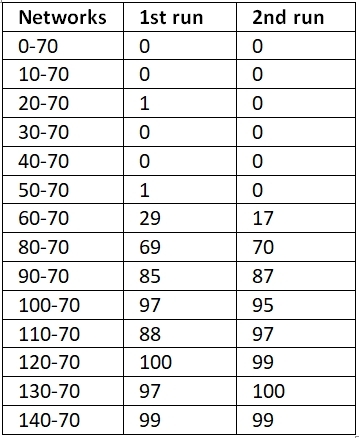
Matches between networks #0, #10, #20, #30, ..., #140.
For each network, two 100 games matches against network #70, which is the reference point.
For example, #0 never wins against #70 (1st run = 0 win out of 100 games, and 2nd run = 0 win),
and #140 almost always wins against #70 (1st run = 99 wins out of 100 games, and 2nd run = 99 wins).
twogtp, with LZ015, --visits=51 --noponder
For example, line 60-70, 29, 17 means network#60 won 29 games out of 100 against #70, and 17 games out of 100 in the second 100 games match.
Two odd things :
#20 won 1 game against #70 !
For #60, the two results vary a lot (29 and 17)
- netw.jpg (94.5 KiB) Viewed 16728 times
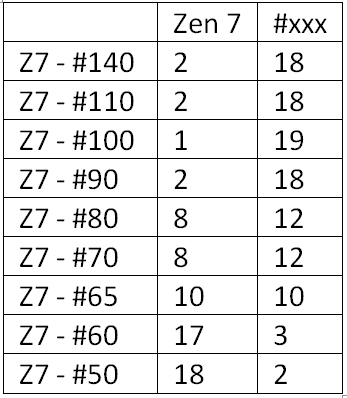
2) Zen7 vs LZ with networks #...
--visits=3201 --noponder for LZ and
-t 12 -T 1 -s 850 (gtp4zen)
Each match is 20 games (10 as B, 10 as W)
Zen takes about twice as much time as LZ
- zen.jpg (67.53 KiB) Viewed 16728 times


 Bill's billiard example may be more interesting - exponential? but the difference is still more normal). I assumed that there is an individual performance distribution for both players (pointwise for simplicity - verifiable in go), and that game result distribution is a function of those two and can be different (though with normal individual distributions the difference will be normal as well). In the A>B>C 60%+60% situation it may even be possible to design games with individual shapes for either extreme (A beats C in 61% or 99% - though this may need distorting factors, since the difference will usually be a bit more normal shape, like in dfan's example).