I played black in this game and there was this position were I had to decide how to invade/reduce/attack/defend/surround. It is early in the game and I think the position is very good for black so he should make good moves and keep this advantage. This worked out in the game but there are many other ideas. I'm wondering how other players would handle this position.
How would you play as black?
$$c Black to play
$$ ---------------------------------------
$$ | . . . . . . . . . . . . . . . . . . . |
$$ | . . . . . . . . . . . . . . . . . . . |
$$ | . . . . O . . O . X . . . . . . X . . |
$$ | . . . O . . . . . , . . . X . X . O . |
$$ | . . . . . . . . . X . . . . . . . . . |
$$ | . . . . . . . . . . . . . . O . O . . |
$$ | . . O . . . . . . . . . . . . . . . . |
$$ | . . . . . . . . . . . . . . . . . . . |
$$ | . . . . . . . . . . . . . . . . . . . |
$$ | . X . , . . . . . , . . . . . O . . . |
$$ | X . X X . . . . . . . . . . . . . . . |
$$ | . X O O O . . . . . . . . . . . . . . |
$$ | X . X X O . . . . . . . . . . . . . . |
$$ | . X O . O . . . . . . . . . . . . . . |
$$ | . O . O . . . . . . . . . O . O . . . |
$$ | . . O , . X . X . , . . X X . , O . . |
$$ | . . X X . . . . . . . . . . . X O . . |
$$ | . . . . . . . . . . . . . . X . X . . |
$$ | . . . . . . . . . . . . . . . . . . . |
$$ ---------------------------------------
Sooner or later black must invade/reduce the white moyo on the right side. And it probably has to be soon, because O10 is close to being a sealing move. N5 encourages white's O6 which makes it harder to get out.
Lastly, move 43 makes me vaguely unhappy for reasons that I can't really explain. I would have played F17 instead.
For one thing I am influenced by a book I picked up not long ago. One idea from that book is the importance of diagonally connected points for sabaki (like for making eyes:)).
$$c Black to play
$$ ---------------------------------------
$$ | . . . . . . . . . . . . . . . . . . . |
$$ | . . . . . . . . . . . . . . . . . . . |
$$ | . . . . O . . O . X . . . . . . X . . |
$$ | . . . O . . . . . , . . . X . X . O . |
$$ | . . . . . . . . . X . . . . . . . . . |
$$ | . . . . . . . . . . . . . . O . O . . |
$$ | . . O . . . . . . . . . . . . . . . . |
$$ | . . . . . . . . . . . . . . . . . . . |
$$ | . . . . . . . . . . . . . . . . . . . |
$$ | . X . , . . . . . , . . . . . O C . . |
$$ | X . X X . . . . . . . . . . . a . . . |
$$ | . X O O O . . . . . . . . . C . 1 . . |
$$ | X . X X O . . . . . . . . . . . . . . |
$$ | . X O . O . . . . . . . . . C . C . . |
$$ | . O . O . . . . . . . . . O . O . . . |
$$ | . . O , . X . X . , . . X X . , O . . |
$$ | . . X X . . . . . . . . . . . X O . . |
$$ | . . . . . . . . . . . . . . X . X . . |
$$ | . . . . . . . . . . . . . . . . . . . |
$$ ---------------------------------------
Bill Spight wrote:... I picked up not long ago. One idea from that book is the importance of diagonally connected points for sabaki (like for making eyes:)).
...
Bill, could you start a new thread on this? I'd like to hear details. Thanks
I guess the idea is that the marked points in the original are followup plays, and after those plays, you have a selection of those other marked points available as diagonal plays.
Loons wrote:I might R8; it looks hard to me for white to be severe. Also I can't see a clever way of patching that four space rent in the lower side.
Also, seems white's result top left looks singularly and unnecessarily terrible. Perhaps he could play 50 at C15?
Agree about white's result in top left. My idea was to reduce on the right because black might not get there first and then invade the starpoint shimari to have more points. I think this would be more reasonable for white.
$$c
$$ ---------------------------------------
$$ | . . . . . . . . . . . . . . . . . . . |
$$ | . . . . . . . . . . . . . . . . . . . |
$$ | . . . . O . . O . X . . . . . . X . . |
$$ | . 6 . O . . . . . , . . . X . X . O . |
$$ | . 3 4 . . . . . . X . . . . . . . . . |
$$ | . 5 7 8 . . . . . . . . . . O . O . . |
$$ | . 9 O . . . . . . . . . . . . . . . . |
$$ | . . . . . . . . . . . . . . . . . . . |
$$ | . . . . . . . . . . . . . . . . . . . |
$$ | . X . , . . . . . , . . . . . O . . . |
$$ | X . X X . . . . . . . . . . . . . . . |
$$ | . X O O O . . . . . . . . 1 . 2 . . . |
$$ | X . X X O . . . . . . . . . . . . . . |
$$ | . X O . O . . . . . . . . . . . . . . |
$$ | . O . O . . . . . . . . . O . O . . . |
$$ | . . O , . X . X . , . . X X . , O . . |
$$ | . . X X . . . . . . . . . . . X O . . |
$$ | . . . . . . . . . . . . . . X . X . . |
$$ | . . . . . . . . . . . . . . . . . . . |
$$ ---------------------------------------
Joaz Banbeck wrote:Lastly, move 43 makes me vaguely unhappy for reasons that I can't really explain. I would have played F17 instead.
I played 43 (h4) because I was looking for a way to attack white's bottom left group and it seemed if black tried to attack from the left side he could only take profit on the bottom and in gote. My decision was to take the profit right away and wait for a better chance to attack. The shape is maybe sad because (I think) normally when h4 is played it is to protect a weakness on e3. I played it to have a strong outside and to surround territory.
Last edited by kvasir on Sun Aug 26, 2012 8:25 am, edited 1 time in total.
After some thought I came up with this if black r8. Maybe reasonable way to play for both. I think white could also choose to ask black some l&d questions, but I'm not sure if this can be good for white unless black makes mistakes.
$$Wcm2 a-d are 12-15
$$ ---------------------------------------
$$ | . . . . . . . . . . . . . . . . . . . |
$$ | . . . . . . . . . . . . . . . . . . . |
$$ | . . . . O . . O . X . . . . . . X . . |
$$ | . . . O . . . . . , . . . X . X . O . |
$$ | . . . . . . . . . X . . . . . . . . . |
$$ | . . . . . . . . . . . . . . O . O . . |
$$ | . . O . . . . . . . . . . . . . . . . |
$$ | . . . . . . . . . . . . . . . . . . . |
$$ | . . . . . . . . . . . . . . 7 . . . . |
$$ | . X . , . . . . . , . . . 0 6 O 9 5 . |
$$ | X . X X . . . . . . . . . . . 8 1 4 . |
$$ | . X O O O . . . . . . . . . 2 b B . . |
$$ | X . X X O . . . . . . . . . . a . . . |
$$ | . X O . O . . . . . . c . . . . 3 . . |
$$ | . O . O . . . . . . d . . O . O . . . |
$$ | . . O , . X . X . , . . X X . , O . . |
$$ | . . X X . . . . . . . . . . . X O . . |
$$ | . . . . . . . . . . . . . . X . X . . |
$$ | . . . . . . . . . . . . . . . . . . . |
$$ ---------------------------------------
Bill Spight wrote:... I picked up not long ago. One idea from that book is the importance of diagonally connected points for sabaki (like for making eyes:)).
...
Bill, could you start a new thread on this? I'd like to hear details. Thanks
Remind me in December. I am about to be swamped with work.
The Adkins Principle: At some point, doesn't thinking have to go on?
— Winona Adkins
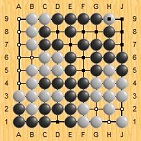


 points indicate diagonally related points to
  , all of which are good points. Another play I considered is the attachment at "a".