Thermography

Talk about improving your game, resources you like, games you played, etc.
Post Reply
Gérard TAILLE
Gosei
Posts: 1346
Joined: Sun Aug 23, 2020 2:47 am
Rank: 1d
GD Posts: 0
Has thanked: 21 times
Been thanked: 57 times

Re: Thermography

Post by Gérard TAILLE »

Bill Spight wrote: Now let's use my original model of the environment as a set of simple gote, each gaining gi, such that g0 ≥ g1 ≥ g2 ≥ . . . . Let g1 = 2 and :w3: takes g0.
Click Here To Show Diagram Code
[go]$$Wc Sequence 1
$$ -----------------
$$ | . B B W B 5 O |
$$ | X X W 4 W . O |
$$ | . X O O O O O |
$$ | . X X X O . . |
$$ | . . . X O O O |
$$ | . . . X X X X |
$$ | . . . . . . . |
$$ -----------------[/go]
:b6: connects.
I like very much your set of simple gote g0 ≥ g1 ≥ g2 ≥ . . . . because it is very simple to analyse.
Click Here To Show Diagram Code
[go]$$Wc Sequence 1
$$ -----------------
$$ | . . B . B . O |
$$ | X X W B W . O |
$$ | . X O O O O O |
$$ | . X X X O . . |
$$ | . . . X O O O |
$$ | . . . X X X X |
$$ | . . . . . . . |
$$ -----------------[/go]
So let's consider the local area above and let's add an environment made of simple gote g1 ≥ g2 ≥ g3 ≥ . . . .
The temperature of the environment is of course t = g1.
In addition is it a good understanding that no ko threat exists in the environment? In other words if a ko fight takes place in the local area then an answer to this ko by a move in the environment can be only a move taking the biggest gote.

If this is true, before commenting your last post I need another information
Click Here To Show Diagram Code
[go]$$Wc Sequence 1
$$ -----------------
$$ | . 2 B 1 B a O |
$$ | X X W B W . O |
$$ | . X O O O O O |
$$ | . X X X O . . |
$$ | . . . X O O O |
$$ | . . . X X X X |
$$ | . . . . . . . |
$$ -----------------[/go]
You understood from my earlier posts, that white takes the ko with :w1: as soon as temperature drops to 2⅓.
Because you consider :b2: gains 2½ I conclude :w1: is sente.
Now, white considering that a move at "a" gains only 2 points, she plays tenuki until temperature drops to 2.
My question is the following:
At which temperature will black takes the ko and what will be the final score for black if, after black has taken the ko, white continues to wait until temperature drops to 2 before answering at "a" ?
Of course if black takes the ko between temperature 2 and 2⅓ then if black continues by playing herself at "a" the two following white moves will be obviously white takes the ko and white connects.
Bill Spight
Honinbo
Posts: 10905
Joined: Wed Apr 21, 2010 1:24 pm
Has thanked: 3651 times
Been thanked: 3373 times

Re: Thermography

Post by Bill Spight »

Gérard TAILLE wrote:
Bill Spight wrote: Now let's use my original model of the environment as a set of simple gote, each gaining gi, such that g0 ≥ g1 ≥ g2 ≥ . . . . Let g1 = 2 and :w3: takes g0.
Click Here To Show Diagram Code
[go]$$Wc Sequence 1
$$ -----------------
$$ | . B B W B 5 O |
$$ | X X W 4 W . O |
$$ | . X O O O O O |
$$ | . X X X O . . |
$$ | . . . X O O O |
$$ | . . . X X X X |
$$ | . . . . . . . |
$$ -----------------[/go]
:b6: connects.
I like very much your set of simple gote g0 ≥ g1 ≥ g2 ≥ . . . . because it is very simple to analyse.
Click Here To Show Diagram Code
[go]$$Wc Sequence 1
$$ -----------------
$$ | . . B . B . O |
$$ | X X W B W . O |
$$ | . X O O O O O |
$$ | . X X X O . . |
$$ | . . . X O O O |
$$ | . . . X X X X |
$$ | . . . . . . . |
$$ -----------------[/go]
So let's consider the local area above and let's add an environment made of simple gote g1 ≥ g2 ≥ g3 ≥ . . . .
The temperature of the environment is of course t = g1.
Actually, you can set t to any of the gis.
In addition is it a good understanding that no ko threat exists in the environment?
You have to say something about the ko threat situation.
In other words if a ko fight takes place in the local area then an answer to this ko by a move in the environment can be only a move taking the biggest gote.

If this is true, before commenting your last post I need another information
Click Here To Show Diagram Code
[go]$$Wc Sequence 1
$$ -----------------
$$ | . 2 B 1 B a O |
$$ | X X W B W . O |
$$ | . X O O O O O |
$$ | . X X X O . . |
$$ | . . . X O O O |
$$ | . . . X X X X |
$$ | . . . . . . . |
$$ -----------------[/go]
You understood from my earlier posts, that white takes the ko with :w1: as soon as temperature drops to 2⅓.
I understood from that post that White takes the ko between temperature 2½ and 2. Maybe you have an earlier post in mind.
Because you consider :b2: gains 2½ I conclude :w1: is sente.
In the sense that it raises the local temperature until White replies, but you can also consider it to be ambiguous, because when White replies the local temperature has not dropped. (See https://senseis.xmp.net/?AmbiguousPosition ).
Now, white considering that a move at "a" gains only 2 points, she plays tenuki until temperature drops to 2.
My question is the following:
At which temperature will black takes the ko and what will be the final score for black if, after black has taken the ko, white continues to wait until temperature drops to 2 before answering at "a" ?
As indicated, with no ko threats this position is equivalent to a simple 2 point gote. That being the case it is played in descending order with the gote in the environment.

If White has enough sufficiently large ko threats, White could fight the ko and possibly gain by delaying winning the ko at a. OC, in this case those threats would have to be humungous, since if Black fills the ko she threatens to kill the White group.
The Adkins Principle:
At some point, doesn't thinking have to go on?
— Winona Adkins

Visualize whirled peas.

Everything with love. Stay safe.
Gérard TAILLE
Gosei
Posts: 1346
Joined: Sun Aug 23, 2020 2:47 am
Rank: 1d
GD Posts: 0
Has thanked: 21 times
Been thanked: 57 times

Re: Thermography

Post by Gérard TAILLE »

Bill Spight wrote:
Gérard TAILLE wrote:
Bill Spight wrote: Now let's use my original model of the environment as a set of simple gote, each gaining gi, such that g0 ≥ g1 ≥ g2 ≥ . . . . Let g1 = 2 and :w3: takes g0.
Click Here To Show Diagram Code
[go]$$Wc Sequence 1
$$ -----------------
$$ | . B B W B 5 O |
$$ | X X W 4 W . O |
$$ | . X O O O O O |
$$ | . X X X O . . |
$$ | . . . X O O O |
$$ | . . . X X X X |
$$ | . . . . . . . |
$$ -----------------[/go]
:b6: connects.
I like very much your set of simple gote g0 ≥ g1 ≥ g2 ≥ . . . . because it is very simple to analyse.
Click Here To Show Diagram Code
[go]$$Wc Sequence 1
$$ -----------------
$$ | . . B . B . O |
$$ | X X W B W . O |
$$ | . X O O O O O |
$$ | . X X X O . . |
$$ | . . . X O O O |
$$ | . . . X X X X |
$$ | . . . . . . . |
$$ -----------------[/go]
So let's consider the local area above and let's add an environment made of simple gote g1 ≥ g2 ≥ g3 ≥ . . . .
The temperature of the environment is of course t = g1.
Actually, you can set t to any of the gis.
In addition is it a good understanding that no ko threat exists in the environment?
You have to say something about the ko threat situation.
In other words if a ko fight takes place in the local area then an answer to this ko by a move in the environment can be only a move taking the biggest gote.

If this is true, before commenting your last post I need another information
Click Here To Show Diagram Code
[go]$$Wc Sequence 1
$$ -----------------
$$ | . 2 B 1 B a O |
$$ | X X W B W . O |
$$ | . X O O O O O |
$$ | . X X X O . . |
$$ | . . . X O O O |
$$ | . . . X X X X |
$$ | . . . . . . . |
$$ -----------------[/go]
You understood from my earlier posts, that white takes the ko with :w1: as soon as temperature drops to 2⅓.
I understood from that post that White takes the ko between temperature 2½ and 2. Maybe you have an earlier post in mind.
Because you consider :b2: gains 2½ I conclude :w1: is sente.
In the sense that it raises the local temperature until White replies, but you can also consider it to be ambiguous, because when White replies the local temperature has not dropped. (See https://senseis.xmp.net/?AmbiguousPosition ).
Now, white considering that a move at "a" gains only 2 points, she plays tenuki until temperature drops to 2.
My question is the following:
At which temperature will black takes the ko and what will be the final score for black if, after black has taken the ko, white continues to wait until temperature drops to 2 before answering at "a" ?
As indicated, with no ko threats this position is equivalent to a simple 2 point gote. That being the case it is played in descending order with the gote in the environment.

If White has enough sufficiently large ko threats, White could fight the ko and possibly gain by delaying winning the ko at a. OC, in this case those threats would have to be humungous, since if Black fills the ko she threatens to kill the White group.
Finally it seems we have now identified the unexpected best sequence when the temperature drops regularly:
Click Here To Show Diagram Code
[go]$$Bc Sequence 1
$$ -----------------
$$ | . . . . . . O |
$$ | X X . . . . O |
$$ | . X O O O O O |
$$ | . X X X O . . |
$$ | . . . X O O O |
$$ | . . . X X X X |
$$ | . . . . . . . |
$$ -----------------[/go]
At high temperature black should be able to play in sente

eather
Click Here To Show Diagram Code
[go]$$B
$$ -----------------
$$ | . . . 3 1 4 O |
$$ | X X . . 2 . O |
$$ | . X O O O O O |
$$ | . X X X O . . |
$$ | . . . X O O O |
$$ | . . . X X X X |
$$ | . . . . . . . |
$$ -----------------[/go]
or
Click Here To Show Diagram Code
[go]$$B
$$ -----------------
$$ | . . 3 4 1 . O |
$$ | X X 2 5 6 . O |
$$ | . X O O O O O |
$$ | . X X X O . . |
$$ | . . . X O O O |
$$ | . . . X X X X |
$$ | . . . . . . . |
$$ -----------------[/go]
with this second sequence, when temperature drops between between 2½ and 2 white can follow in sente by
Click Here To Show Diagram Code
[go]$$W
$$ -----------------
$$ | . 2 B 1 B . O |
$$ | X X W B W . O |
$$ | . X O O O O O |
$$ | . X X X O . . |
$$ | . . . X O O O |
$$ | . . . X X X X |
$$ | . . . . . . . |
$$ -----------------[/go]
and we reach the position
Click Here To Show Diagram Code
[go]$$B
$$ -----------------
$$ | . B B W B . O |
$$ | X X W . W . O |
$$ | . X O O O O O |
$$ | . X X X O . . |
$$ | . . . X O O O |
$$ | . . . X X X X |
$$ | . . . . . . . |
$$ -----------------[/go]
which can viewed as a 2 gote area with a local score of -3 for black point of view.

This result is a little unexpected maybe due to some miscalculation of position scores from both of us.

The very common monkey appears really a quite difficult move to analyse in a real environment where you can be faced to ko threats and to miai or tedomari considerations!

Very good job Bill.

BTW Bill, does it exist some theory in which we add in the ideal environment of gote areas, the same number of ko threats for black and white, with value decreasing regularly.
Such environment will be interesting to handle a local ko fight which impose for one of the player to find greater ko threats than the other player.
Bill Spight
Honinbo
Posts: 10905
Joined: Wed Apr 21, 2010 1:24 pm
Has thanked: 3651 times
Been thanked: 3373 times

Re: Thermography

Post by Bill Spight »

Gérard TAILLE wrote:BTW Bill, does it exist some theory in which we add in the ideal environment of gote areas, the same number of ko threats for black and white, with value decreasing regularly.
Such environment will be interesting to handle a local ko fight which impose for one of the player to find greater ko threats than the other player.
It may be somewhat different from what you have in mind, but in 2000 Professor Berlekamp proposed a neutral threat environment (NTE), where each side has an equal and opposite non-removable ko threat to each such ko threat of the other side. Bill Fraser and I worked on the theory. I discovered the first and, to my knowledge, only proof in NTE, namely, that for basic approach kos where White to play can win the ko in one move for a local score of 0 and the score if Black wins is x, the mean value and temperature of the ko is x/F, where F is a Fibonacci number. x/5 for the one move approach ko, x/8 for the two move approach ko, x/13 for the three move approach ko, etc. I presented this in a paper in 2002 at the third Computers and Games workshop in Edmonton, Canada. The proceedings were published by Springer.

AFAIK, no further research has been done on NTE. It is not something that is easy to calculate at the table, as it involves algebra, and in addition is not realistic. Unlike regular plays at go, ko threats are typically relatively few and not close in value to each other.
The Adkins Principle:
At some point, doesn't thinking have to go on?
— Winona Adkins

Visualize whirled peas.

Everything with love. Stay safe.
Gérard TAILLE
Gosei
Posts: 1346
Joined: Sun Aug 23, 2020 2:47 am
Rank: 1d
GD Posts: 0
Has thanked: 21 times
Been thanked: 57 times

Re: Thermography

Post by Gérard TAILLE »

Bill Spight wrote:
Gérard TAILLE wrote:BTW Bill, does it exist some theory in which we add in the ideal environment of gote areas, the same number of ko threats for black and white, with value decreasing regularly.
Such environment will be interesting to handle a local ko fight which impose for one of the player to find greater ko threats than the other player.
It may be somewhat different from what you have in mind, but in 2000 Professor Berlekamp proposed a neutral threat environment (NTE), where each side has an equal and opposite non-removable ko threat to each such ko threat of the other side. Bill Fraser and I worked on the theory. I discovered the first and, to my knowledge, only proof in NTE, namely, that for basic approach kos where White to play can win the ko in one move for a local score of 0 and the score if Black wins is x, the mean value and temperature of the ko is x/F, where F is a Fibonacci number. x/5 for the one move approach ko, x/8 for the two move approach ko, x/13 for the three move approach ko, etc. I presented this in a paper in 2002 at the third Computers and Games workshop in Edmonton, Canada. The proceedings were published by Springer.

AFAIK, no further research has been done on NTE. It is not something that is easy to calculate at the table, as it involves algebra, and in addition is not realistic. Unlike regular plays at go, ko threats are typically relatively few and not close in value to each other.
OK Bill I understand that we can try to build a model with ko threats but at the end it will almost surely not be interesting in practice.
In any case a tool like thermograph or difference games cannot be a miracle tool telling you where to play wtihout any error but il could (has to) be a useful tool giving you a good guess for the best move => real gain of time by reading first the probable best sequence.
Thermography approach needs some training but my feeling is that it is really a very good tool in order to begin the reading of sequences in the best conditions (I mean beginning by the probable best moves). Of course if the local situation is rather complex it doesn't harm to calculate a thermograph which is not 100% correct but quite near from the correct one.
Concerning difference games I can easily see some examples allowing to eliminate dominated moves but for the time being it seems to me difficult to use it in practice. Thermography looks to me far more efficient and I prefer to train myself on this tools keeping difference games only as an interesting tool for a theorical point of view.
Do somebody know what pro think about these tools in practise ?
Bill Spight
Honinbo
Posts: 10905
Joined: Wed Apr 21, 2010 1:24 pm
Has thanked: 3651 times
Been thanked: 3373 times

Re: Thermography

Post by Bill Spight »

Gérard TAILLE wrote:
Bill Spight wrote:
Gérard TAILLE wrote:BTW Bill, does it exist some theory in which we add in the ideal environment of gote areas, the same number of ko threats for black and white, with value decreasing regularly.
Such environment will be interesting to handle a local ko fight which impose for one of the player to find greater ko threats than the other player.
It may be somewhat different from what you have in mind, but in 2000 Professor Berlekamp proposed a neutral threat environment (NTE), where each side has an equal and opposite non-removable ko threat to each such ko threat of the other side. Bill Fraser and I worked on the theory. I discovered the first and, to my knowledge, only proof in NTE, namely, that for basic approach kos where White to play can win the ko in one move for a local score of 0 and the score if Black wins is x, the mean value and temperature of the ko is x/F, where F is a Fibonacci number. x/5 for the one move approach ko, x/8 for the two move approach ko, x/13 for the three move approach ko, etc. I presented this in a paper in 2002 at the third Computers and Games workshop in Edmonton, Canada. The proceedings were published by Springer.

AFAIK, no further research has been done on NTE. It is not something that is easy to calculate at the table, as it involves algebra, and in addition is not realistic. Unlike regular plays at go, ko threats are typically relatively few and not close in value to each other.
OK Bill I understand that we can try to build a model with ko threats but at the end it will almost surely not be interesting in practice.
In any case a tool like thermograph or difference games cannot be a miracle tool telling you where to play wtihout any error but il could (has to) be a useful tool giving you a good guess for the best move => real gain of time by reading first the probable best sequence.
Thermography approach needs some training but my feeling is that it is really a very good tool in order to begin the reading of sequences in the best conditions (I mean beginning by the probable best moves). Of course if the local situation is rather complex it doesn't harm to calculate a thermograph which is not 100% correct but quite near from the correct one.
Concerning difference games I can easily see some examples allowing to eliminate dominated moves but for the time being it seems to me difficult to use it in practice. Thermography looks to me far more efficient and I prefer to train myself on this tools keeping difference games only as an interesting tool for a theorical point of view.
For analyzing a position Berlekamp recommended always starting with the thermograph. (Or thermographs for different ko threat assumptions.) IMO that is a good approach. :) OC, in an actual game doing more than finding the count and how much a play gains is not always useful.

When you are considering two different plays, difference games can be very useful, if they give a clear preference. When that happens you don't have to read the whole game tree to find that out. :) Very often, however, they will tell you that the two plays are incomparable, so you are still at square 1. (Or maybe a bit further along because of what you have learned by the analysis.) One advantage of difference games is that they do not always require optimal play to make a decision. Good enough play will do. Thermographs, however, require optimal play at each temperature to be correct. Working on them will help to find optimal play, though. And difference games easily generalize as heuristics for similar situations. For instance:
Click Here To Show Diagram Code
[go]$$Wc White to play
$$ -----------------
$$ | . . . . . . O |
$$ | X X . . . . O |
$$ | . X O O O O O |
$$ | . X X X O . . |
$$ | . . . X O O O |
$$ | . . X X X X . |
$$ | . . X O O O O |
$$ -----------------[/go]
Once White realizes that the reverse sente gains 4 points, connecting on the bottom side is obvious if you have done certain simpler difference games. :)

IMO, doing thermographs and difference games can improve both your reading and intuition. :)
Do somebody know what pro think about these tools in practise ?
The Japanese version of Berlekamp and Wolfe's Mathematical Go sold out in Japan in 3 days in 1994. And Berlekamp held some endgame tournaments in Korea and China. But I am not aware of any writing about these techniques or use of them by professionals. :scratch:
The Adkins Principle:
At some point, doesn't thinking have to go on?
— Winona Adkins

Visualize whirled peas.

Everything with love. Stay safe.
Gérard TAILLE
Gosei
Posts: 1346
Joined: Sun Aug 23, 2020 2:47 am
Rank: 1d
GD Posts: 0
Has thanked: 21 times
Been thanked: 57 times

Re: Thermography

Post by Gérard TAILLE »

Bill Spight wrote: Working on them will help to find optimal play, though. And difference games easily generalize as heuristics for similar situations. For instance:
Click Here To Show Diagram Code
[go]$$Wc White to play
$$ -----------------
$$ | . . . . . . O |
$$ | X X . . . . O |
$$ | . X O O O O O |
$$ | . X X X O . . |
$$ | . . . X O O O |
$$ | . . X X X X . |
$$ | . . X O O O O |
$$ -----------------[/go]
Once White realizes that the reverse sente gains 4 points, connecting on the bottom side is obvious if you have done certain simpler difference games. :)
Click Here To Show Diagram Code
[go]$$Wc White to play
$$ -----------------
$$ | . . . . . . O |
$$ | X X a . . . O |
$$ | . X O O O O O |
$$ | . X X X O . . |
$$ | . . . X O O O |
$$ | . . X X X X b |
$$ | . . X O O O O |
$$ -----------------[/go]
I understand you compare the reverse sente at "a" and the connection at "b" and, with the help of a difference game, you conclude that the connection "b" is better than the reverse sente.
But let's take as environment a unique simple gote of value 4.
The reverse sente move at "a" is better isn't it?
Bill Spight
Honinbo
Posts: 10905
Joined: Wed Apr 21, 2010 1:24 pm
Has thanked: 3651 times
Been thanked: 3373 times

Re: Thermography

Post by Bill Spight »

Gérard TAILLE wrote:
Bill Spight wrote: Working on them will help to find optimal play, though. And difference games easily generalize as heuristics for similar situations. For instance:
Click Here To Show Diagram Code
[go]$$Wc White to play
$$ -----------------
$$ | . . . . . . O |
$$ | X X . . . . O |
$$ | . X O O O O O |
$$ | . X X X O . . |
$$ | . . . X O O O |
$$ | . . X X X X . |
$$ | . . X O O O O |
$$ -----------------[/go]
Once White realizes that the reverse sente gains 4 points, connecting on the bottom side is obvious if you have done certain simpler difference games. :)
Click Here To Show Diagram Code
[go]$$Wc White to play
$$ -----------------
$$ | . . . . . . O |
$$ | X X a . . . O |
$$ | . X O O O O O |
$$ | . X X X O . . |
$$ | . . . X O O O |
$$ | . . X X X X b |
$$ | . . X O O O O |
$$ -----------------[/go]
I understand you compare the reverse sente at "a" and the connection at "b" and, with the help of a difference game, you conclude that the connection "b" is better than the reverse sente.
But let's take as environment a unique simple gote of value 4.
The reverse sente move at "a" is better isn't it?
Well, I don't actually use a difference game for this board, I just know difference games for similar situations.

But my intention, despite the non-independence, was to use the bottom to indicate an environment for the top, given the lack of space on the small board.

So if the top faced an environment with only two 4 point gote, the reverse sente would be correct. And if this combination faced an environment with only one 4 point gote, the reverse sente would be correct, too. :)
The Adkins Principle:
At some point, doesn't thinking have to go on?
— Winona Adkins

Visualize whirled peas.

Everything with love. Stay safe.
Bill Spight
Honinbo
Posts: 10905
Joined: Wed Apr 21, 2010 1:24 pm
Has thanked: 3651 times
Been thanked: 3373 times

Re: Thermography

Post by Bill Spight »

Similarly,
Click Here To Show Diagram Code
[go]$$Wc White to play
$$ -----------------
$$ | . . . . . . O |
$$ | X X . . . . O |
$$ | . X O O O O O |
$$ | . X X X O . . |
$$ | . . . X O O O |
$$ | . . X X X X 1 |
$$ | . . X . O O O |
$$ -----------------[/go]
Because of my experience with those difference games, I can guess that :w1: is White's best play on this board. (It is 1 point better than the reverse sente. :))

And if I am drawing the thermograph, I know that above temperature 3½ White plays the reverse sente first, but somewhere along the line :w1: is White's first play. :)
The Adkins Principle:
At some point, doesn't thinking have to go on?
— Winona Adkins

Visualize whirled peas.

Everything with love. Stay safe.
Gérard TAILLE
Gosei
Posts: 1346
Joined: Sun Aug 23, 2020 2:47 am
Rank: 1d
GD Posts: 0
Has thanked: 21 times
Been thanked: 57 times

Re: Thermography

Post by Gérard TAILLE »

Bill Spight wrote: When you are considering two different plays, difference games can be very useful, if they give a clear preference. When that happens you don't have to read the whole game tree to find that out. :) Very often, however, they will tell you that the two plays are incomparable, so you are still at square 1. (Or maybe a bit further along because of what you have learned by the analysis.) One advantage of difference games is that they do not always require optimal play to make a decision. Good enough play will do. Thermographs, however, require optimal play at each temperature to be correct. Working on them will help to find optimal play, though. And difference games easily generalize as heuristics for similar situations. For instance:
Click Here To Show Diagram Code
[go]$$Wc White to play
$$ -----------------
$$ | . . . . . . O |
$$ | X X . . . . O |
$$ | . X O O O O O |
$$ | . X X X O . . |
$$ | . . . X O O O |
$$ | . . X X X X . |
$$ | . . X O O O O |
$$ -----------------[/go]
Once White realizes that the reverse sente gains 4 points, connecting on the bottom side is obvious if you have done certain simpler difference games. :)

IMO, doing thermographs and difference games can improve both your reading and intuition. :)
When reading your post here above I clearly understand that you agree thermography is very useful but I also understand that it may be a good idea to use also difference games and I take your example as an illustration of that last point.

Now reading your last posts I have the impression that you confirm thermograph is useful (I agree at 100%) but I cannot see a point concerning difference game.

Anyway, taking your example, let me try to explain in more details what appears useful for me with thermography
Click Here To Show Diagram Code
[go]$$W
$$ ------------------------
$$ | . . . . . . O . . O X|
$$ | X X a . . . O O O O X|
$$ | . X O O O O O X X X X|
$$ | X X X X X X X X X . X|
$$ | X . . . . . . . . X X|
$$ | X . . . . . . . . . X|
$$ | b O . . . . . . O O c|
$$ | X O O O O O O O O . X|
$$ | X X X O . O . O O . X|
$$ ------------------------[/go]
First of all, though you find "graph" in the word "thermography", I consider that the thermograph itself is only a visual result of a fondamental analysis based on an ideal environment at temperature t.
In practice many players use thermography without knowing they use it.
Taking the now very well known area at the top of the board, any good player is able to say that, at the beginning of yose, this area is worth 4 points for black in sente. Thermography will explain this in other words : instead of the wording "at the beginning of yose ..." thermography will claim that at a "temperature above 2 then ...". Here is the genius of thermograpy : the value of an area depends on the temperature of the idea environment.
For the same configuration, if we are in the late yose, each player will recognize that the area is a good 3 points gote point. Thermography will precise that this fact will happen when temperature drops under 2.
As you see, without knowing thermography a good player knows the two major points of thermography
- we can give a value to a local area by assuming an ideal environment
- this value depends on the value of the best gote move in this environment

The difference between a pure thermography analysis and the analysis made by a real player is the following : the real player calculates the value of the local environment taking into account only a temperature equal or slightly under the current temperature, ignoring all others and saving a lot of time : if the current temperature is around say 4, who cares about the fact that under temperature 1 the area can be evaluated to 4 points in double sente?

Let's take now the above diagram, white to move. The upper part is the local area we are interested in, the bottom left is the four points gote you proposed and in the bottom right you see a point "c" I consider as a gote point with value g :
0 ≤ g ≤ 4
The temperature of the environment is equal to 4 and the value of our local area (against an ideal environment) is 4 points in reverse sente.

Here is a fondamental comment: though a real environment can very often be approximated by an ideal environment, a real environment can never be ideal. Amongs the various caracteristics of an ideal environment one is really essential: the gain expected from a play in the environment at temperature t, is equal to t/2.

In the above diagram if g = 0 (or very near from 0) then the gain from the environment (4) is far greater than expected value (t/2 = 2). I call such environment a tedomari environment. Taking the fact that a move at "a" is equal to a move at "b" (against an ideal environment) when g= 0 I do not hesitate to guess that the best move is at "b" because in tedomari environment the advantage to play in the environment grows.

In the other hand if g = 4 (or very near from 4) the gain from the environment (0) is far lower than expected value (t/2 = 2). I call such environment a miai environment. In that case I guess the best move is at "a" because in miai environment the advantage to play in the environment diminishes.

if g = 2 the environment looks neither tedomari nor miai and you have to read more to find the best move. Anyway you cannot consider the environment as ideal because after a move at "b" (by either player) the temperature drops suddenly to 2 and the environment becomes a tedomari environment!
Bill Spight
Honinbo
Posts: 10905
Joined: Wed Apr 21, 2010 1:24 pm
Has thanked: 3651 times
Been thanked: 3373 times

Re: Thermography

Post by Bill Spight »

Gérard TAILLE wrote:
Bill Spight wrote: When you are considering two different plays, difference games can be very useful, if they give a clear preference. When that happens you don't have to read the whole game tree to find that out. :) Very often, however, they will tell you that the two plays are incomparable, so you are still at square 1. (Or maybe a bit further along because of what you have learned by the analysis.) One advantage of difference games is that they do not always require optimal play to make a decision. Good enough play will do. Thermographs, however, require optimal play at each temperature to be correct. Working on them will help to find optimal play, though. And difference games easily generalize as heuristics for similar situations. For instance:
Click Here To Show Diagram Code
[go]$$Wc White to play
$$ -----------------
$$ | . . . . . . O |
$$ | X X . . . . O |
$$ | . X O O O O O |
$$ | . X X X O . . |
$$ | . . . X O O O |
$$ | . . X X X X . |
$$ | . . X O O O O |
$$ -----------------[/go]
Once White realizes that the reverse sente gains 4 points, connecting on the bottom side is obvious if you have done certain simpler difference games. :)

IMO, doing thermographs and difference games can improve both your reading and intuition. :)
When reading your post here above I clearly understand that you agree thermography is very useful but I also understand that it may be a good idea to use also difference games and I take your example as an illustration of that last point.

Now reading your last posts I have the impression that you confirm thermograph is useful (I agree at 100%) but I cannot see a point concerning difference game.
The same difference games that suggest playing the gote instead of the reverse sente apply as a heuristic is both cases. The second case is perhaps more striking because the gote gains less by itself (3½ points) than the reverse sente (4 points).
Anyway, taking your example, let me try to explain in more details what appears useful for me with thermography
Click Here To Show Diagram Code
[go]$$W
$$ ------------------------
$$ | . . . . . . O . . O X|
$$ | X X a . . . O O O O X|
$$ | . X O O O O O X X X X|
$$ | X X X X X X X X X . X|
$$ | X . . . . . . . . X X|
$$ | X . . . . . . . . . X|
$$ | b O . . . . . . O O c|
$$ | X O O O O O O O O . X|
$$ | X X X O . O . O O . X|
$$ ------------------------[/go]
First of all, though you find "graph" in the word "thermography", I consider that the thermograph itself is only a visual result of a fondamental analysis based on an ideal environment at temperature t.
In practice many players use thermography without knowing they use it.
When I first joined Professor Berlekamp's study group he was a bit irritated with me because I figured out optimal play and used that to draw the thermograph. ;) His point was that you can use thermography to find optimal play.
Taking the now very well known area at the top of the board, any good player is able to say that, at the beginning of yose, this area is worth 4 points for black in sente.
Commonly this area is described as a 4 point sente for Black. Better to say that it is a 4 point reverse sente for White, since it is the reverse sente that gains 4 points. I don't know how many players I have met who thought that Black gained 4 points with a 4 point sente.

Good players will also say that this area (the top two lines of the board) is worth 3 points for White. The thermographer adds the qualification, on average.
Thermography will explain this in other words : instead of the wording "at the beginning of yose ..." thermography will claim that at a "temperature above 2 then ...".
I think your 2 is a typo for 4. Above temperature 4 the average value (count) of the top is -3.
Here is the genius of thermograpy : the value of an area depends on the temperature of the idea environment.
To be clear, that's the minimax value at that temperature, depending upon who plays first. In this case, below temperature 4 there are two minimax values at each temperature, which the sides of the thermograph indicate.
For the same configuration, if we are in the late yose, each player will recognize that the area is a good 3 points gote point. Thermography will precise that this fact will happen when temperature drops under 2.
I don't know which area you are talking about. The bottom right corner? It is gote. Then I don't know why you are talking about a temperature drop.
As you see, without knowing thermography a good player knows the two major points of thermography
- we can give a value to a local area by assuming an ideal environment
- this value depends on the value of the best gote move in this environment
For an ideal environment with a sufficiently high temperature.

And not every good player has the idea of an ideal environment.
The difference between a pure thermography analysis and the analysis made by a real player is the following : the real player calculates the value of the local environment taking into account only a temperature equal or slightly under the current temperature, ignoring all others and saving a lot of time : if the current temperature is around say 4, who cares about the fact that under temperature 1 the area can be evaluated to 4 points in double sente?
Indeed. The practical player can usually dispense with that information and spend her time on other things.
Let's take now the above diagram, white to move. The upper part is the local area we are interested in, the bottom left is the four points gote you proposed and in the bottom right you see a point "c" I consider as a gote point with value g :
0 ≤ g ≤ 4
g = 3, OC. :)
The temperature of the environment is equal to 4 and the value of our local area (against an ideal environment) is 4 points in reverse sente.
Do you mean that the reverse sente gains 4 points, on average?
Here is a fondamental comment: though a real environment can very often be approximated by an ideal environment, a real environment can never be ideal. Amongs the various caracteristics of an ideal environment one is really essential: the gain expected from a play in the environment at temperature t, is equal to t/2.
An ideal environment for every possible game has an infinite nember of plays. However, given a specific game or go position, there is at least one finite ideal environment. Representing a simple gote that gains g points for either side as ±g, the environment, ±4, ±3½, ±3, ±2½, ±2, ±1½, ±1, ±½ should be ideal for the top side position. :)
In the above diagram if g = 0 (or very near from 0) then the gain from the environment (4) is far greater than expected value (t/2 = 2). I call such environment a tedomari environment.
OK. Any significant temperature drop can indicate a kind of tedomari. I.e., getting the last move at a specific temperature can be important. :)
Taking the fact that a move at "a" is equal to a move at "b" (against an ideal environment) when g= 0 I do not hesitate to guess that the best move is at "b" because in tedomari environment the advantage to play in the environment grows.

In the other hand if g = 4 (or very near from 4) the gain from the environment (0) is far lower than expected value (t/2 = 2). I call such environment a miai environment. In that case I guess the best move is at "a" because in miai environment the advantage to play in the environment diminishes.

if g = 2 the environment looks neither tedomari nor miai and you have to read more to find the best move. Anyway you cannot consider the environment as ideal because after a move at "b" (by either player) the temperature drops suddenly to 2 and the environment becomes a tedomari environment!
The thermographer will be alert to the gote at temperature 2, because the left wall of the thermograph for the top position has an inflection point at temperature 2. :)
Last edited by Bill Spight on Sun Oct 11, 2020 9:44 pm, edited 1 time in total.
The Adkins Principle:
At some point, doesn't thinking have to go on?
— Winona Adkins

Visualize whirled peas.

Everything with love. Stay safe.
Gérard TAILLE
Gosei
Posts: 1346
Joined: Sun Aug 23, 2020 2:47 am
Rank: 1d
GD Posts: 0
Has thanked: 21 times
Been thanked: 57 times

Re: Thermography

Post by Gérard TAILLE »

OK OC for the typo you corrected!
In addition instead of each player will recognize that the area is a good 3 points gote point you should read 4 points gote. Sorry for that.

Concerning the area on the bottom right. I know that on the diagram the gote value is g=3 but I know you have undertood that I vary this value to analyse various environment.
When I wrote The temperature of the environment is equal to 4 and the value of our local area (against an ideal environment) is 4 points in reverse sente. I do not mean that the reverse sente gains 4 points, on average.
If mean black would be advised to play in sente before temperature drops under 4 because, as soon as the temperature drops under 4 white, by playing the reverse sente at temperature t, will gain 4-t.
Bill Spight wrote: An ideal environment for every possible game has an infinite nember of plays. However, given a specific game or go position, there is at least one finite ideal environment. Representing a simple gote that gains g points for either side as ±g, the environment, ±4, ±3½, ±3, ±2½, ±2, ±1½, ±1, ±½ should be ideal for the top side position.
No real disagreement indeed it maybe only a problem of vocabulary. The basic reasons I said a real environment can never be ideal are the following:
- firstly when you calculate the real score with a real environment the resulting score is always a round number and cannot be something like n + t/2 for a total of say 2⅔, can it?
- secondly the environment, ±4, ±3½, ±3, ±2½, ±2, ±1½, ±1, ±½ looks quite ideal especially because when you play in this environment you gain exactly 2 points i.e. t/2 witch is fine. But as soon as the first gote point has been played, the new best gote point is ±3½, and this resulting environment cannot be also ideal with a gain of t/2.

Example of standard calculation without (?) thermography:
Click Here To Show Diagram Code
[go]$$B
$$ -----------------
$$ | . . . . . . O |
$$ | X X . . . . O |
$$ | . X O O O O O |
$$ | . X X X O . . |
$$ | . . . X O O O |
$$ | . . . X X X X |
$$ | . . . . . . . |
$$ -----------------[/go]
Imagine a good player analysing the local area in the assumption that the best gote move in the environment has a value > 4.

Because she is pretty good player she will imagine the following sequence:

Black to play:
Black begins by the sente sequence
Click Here To Show Diagram Code
[go]$$B Black to play
$$ -----------------
$$ | . . 3 4 1 . O |
$$ | X X 2 5 6 . O |
$$ | . X O O O O O |
$$ | . X X X O . . |
$$ | . . . X O O O |
$$ | . . . X X X X |
$$ | . . . . . . . |
$$ -----------------[/go]
then white continues in sente by
Click Here To Show Diagram Code
[go]$$W Black to play
$$ -----------------
$$ | . 2 B 1 B . O |
$$ | X X W . W . O |
$$ | . X O O O O O |
$$ | . X X X O . . |
$$ | . . . X O O O |
$$ | . . . X X X X |
$$ | . . . . . . . |
$$ -----------------[/go]
and finally you add the following exchange:
Click Here To Show Diagram Code
[go]$$B Black to play
$$ -----------------
$$ | . B B W B 2 O |
$$ | X X W 1 W . O |
$$ | . X O O O O O |
$$ | . X X X O . . |
$$ | . . . X O O O |
$$ | . . . X X X X |
$$ | . . . . . . . |
$$ -----------------[/go]
to reach the position
Click Here To Show Diagram Code
[go]$$B Black to play
$$ -----------------
$$ | . B B . B W O |
$$ | X X W B W . O |
$$ | . X O O O O O |
$$ | . X X X O . . |
$$ | . . . X O O O |
$$ | . . . X X X X |
$$ | . . . . . . . |
$$ -----------------[/go]
and now by a simple average calculation she counts the position as -3.

White to play is far more simple:
Click Here To Show Diagram Code
[go]$$W white to play
$$ -----------------
$$ | . . . . . . O |
$$ | X X 1 . . . O |
$$ | . X O O O O O |
$$ | . X X X O . . |
$$ | . . . X O O O |
$$ | . . . X X X X |
$$ | . . . . . . . |
$$ -----------------[/go]
and here again by a simple average calculation she counts the position as -7.

In her mind the conclusion is simply a 4 point reverse sente for white.

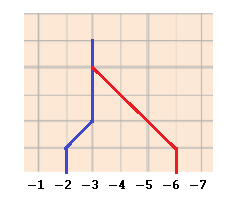
But here is the point: without being aware of thermography the player has indeed made all the thermography analysis and all the calculation above can be visualised by the followng thermograph in which you can see in the bottom of the thermograph the two vertical lines corresponding to the average scores calculated effectively by the player.

Note that the wordings reverse sente and average used by the player implies indirectly the use of an ideal environment.
t2.png
t2.png (3.78 KiB) Viewed 30398 times
Bill Spight
Honinbo
Posts: 10905
Joined: Wed Apr 21, 2010 1:24 pm
Has thanked: 3651 times
Been thanked: 3373 times

Re: Thermography

Post by Bill Spight »

Gérard TAILLE wrote: When I wrote The temperature of the environment is equal to 4 and the value of our local area (against an ideal environment) is 4 points in reverse sente. I do not mean that the reverse sente gains 4 points, on average.
If mean black would be advised to play in sente before temperature drops under 4 because, as soon as the temperature drops under 4 white, by playing the reverse sente at temperature t, will gain 4-t.
Well, the area is worth 3 points to White, on average. The 4 points refers to how much the reverse sente gains, again, on average, which we can drop if you like. :) It is important to distinguish between the count of an area and the gain of a move. For the sake of our readers. :)
Bill Spight wrote: An ideal environment for every possible game has an infinite number of plays. However, given a specific game or go position, there is at least one finite ideal environment. Representing a simple gote that gains g points for either side as ±g, the environment, ±4, ±3½, ±3, ±2½, ±2, ±1½, ±1, ±½ should be ideal for the top side position.
No real disagreement indeed it maybe only a problem of vocabulary.
I think it is a question of definition. For a specific game an ideal environment is one that produces the thermograph for the game. That's the purpose of the ideal environment.
The basic reasons I said a real environment can never be ideal are the following:
- firstly when you calculate the real score with a real environment the resulting score is always a round number and cannot be something like n + t/2 for a total of say 2⅔, can it?
- secondly the environment, ±4, ±3½, ±3, ±2½, ±2, ±1½, ±1, ±½ looks quite ideal especially because when you play in this environment you gain exactly 2 points i.e. t/2 witch is fine. But as soon as the first gote point has been played, the new best gote point is ±3½, and this resulting environment cannot be also ideal with a gain of t/2.
Well, of course that last requirement cannot be met with a finite environment. ;)
Example of standard calculation without (?) thermography:
Click Here To Show Diagram Code
[go]$$B
$$ -----------------
$$ | . . . . . . O |
$$ | X X . . . . O |
$$ | . X O O O O O |
$$ | . X X X O . . |
$$ | . . . X O O O |
$$ | . . . X X X X |
$$ | . . . . . . . |
$$ -----------------[/go]
Imagine a good player analysing the local area in the assumption that the best gote move in the environment has a value > 4.

Because she is pretty good player she will imagine the following sequence:

Black to play:
Black begins by the sente sequence
Click Here To Show Diagram Code
[go]$$B Black to play
$$ -----------------
$$ | . . 3 4 1 . O |
$$ | X X 2 5 6 . O |
$$ | . X O O O O O |
$$ | . X X X O . . |
$$ | . . . X O O O |
$$ | . . . X X X X |
$$ | . . . . . . . |
$$ -----------------[/go]
then white continues in sente by
Click Here To Show Diagram Code
[go]$$W Black to play
$$ -----------------
$$ | . 2 B 1 B . O |
$$ | X X W . W . O |
$$ | . X O O O O O |
$$ | . X X X O . . |
$$ | . . . X O O O |
$$ | . . . X X X X |
$$ | . . . . . . . |
$$ -----------------[/go]
and finally you add the following exchange:
Click Here To Show Diagram Code
[go]$$B Black to play
$$ -----------------
$$ | . B B W B 2 O |
$$ | X X W 1 W . O |
$$ | . X O O O O O |
$$ | . X X X O . . |
$$ | . . . X O O O |
$$ | . . . X X X X |
$$ | . . . . . . . |
$$ -----------------[/go]
to reach the position
Click Here To Show Diagram Code
[go]$$B Black to play
$$ -----------------
$$ | . B B . B W O |
$$ | X X W B W . O |
$$ | . X O O O O O |
$$ | . X X X O . . |
$$ | . . . X O O O |
$$ | . . . X X X X |
$$ | . . . . . . . |
$$ -----------------[/go]
and now by a simple average calculation she counts the position as -3.

White to play is far more simple:
Click Here To Show Diagram Code
[go]$$W white to play
$$ -----------------
$$ | . . . . . . O |
$$ | X X 1 . . . O |
$$ | . X O O O O O |
$$ | . X X X O . . |
$$ | . . . X O O O |
$$ | . . . X X X X |
$$ | . . . . . . . |
$$ -----------------[/go]
and here again by a simple average calculation she counts the position as -7.

In her mind the conclusion is simply a 4 point reverse sente for white.

But here is the point: without being aware of thermography the player has indeed made all the thermography analysis and all the calculation above can be visualised by the followng thermograph in which you can see in the bottom of the thermograph the two vertical lines corresponding to the average scores calculated effectively by the player.

Note that the wordings reverse sente and average used by the player implies indirectly the use of an ideal environment.
t2.png
Well, for one thing there are plays that the player has not tried. E.g.,
Click Here To Show Diagram Code
[go]$$Bc Black to play
$$ -----------------
$$ | . . 3 . 1 4 O |
$$ | X X . . 2 . O |
$$ | . X O O O O O |
$$ | . X X X O . . |
$$ | . . . X O O O |
$$ | . . . X X X X |
$$ | . . . . . . . |
$$ -----------------[/go]
Which she may have seen in a textbook.

It is true that my feeling was that this was too passive for White, and I came up with this.
Click Here To Show Diagram Code
[go]$$Bc Black to play
$$ -----------------
$$ | . . 5 2 1 . O |
$$ | X X 4 3 6 . O |
$$ | . X O O O O O |
$$ | . X X X O . . |
$$ | . . . X O O O |
$$ | . . . X X X X |
$$ | . . . . . . . |
$$ -----------------[/go]
One reason I stopped here was that I had calculated the thermograph for the textbook result years ago and could therefore tell that it was worse for White on average than this result. But if I had not done so I would have had to do some calculation, or in a game I might have just gone with my gut feeling.

I know from long experience that pros miscalculate yose in textbooks. Any sizable text, with some recent exceptions, will probably have more than 100 calculation errors. Probably because they go with their gut feelings.

Edit:
Note that the wordings reverse sente and average used by the player implies indirectly the use of an ideal environment.
Simply knowing the rules for finding the territory values for sente and gote does not imply any idea of an ideal environment. The rules can be derived in other ways. In fact the original thermography did not refer to an environment at all. Berlekamp came up with the idea of an ideal environment, although he used different terminology. I had independently come up with the idea of an environment, by which I was able to derive those rules before learning thermography. And later I was able to define thermography in terms of an ideal environment in order to apply thermography to multiple ko and superko positions.

Now, pros certainly have an idea about the environment. Sometimes even strong amateurs have trouble with the idea that correct play in a position without an environment (as we would say, at temperature 0) may be different from the play used to calculate the territory of that position. "This is correct play in this position. Why don't we use correct play to find the territory?"

But if pros in general had the idea of an ideal environment, there would be no confusion about double sente. Thermography indicates double sente at temperatures where both walls of the thermograph are vertical. A simple and clear explanation. :)
The Adkins Principle:
At some point, doesn't thinking have to go on?
— Winona Adkins

Visualize whirled peas.

Everything with love. Stay safe.
Gérard TAILLE
Gosei
Posts: 1346
Joined: Sun Aug 23, 2020 2:47 am
Rank: 1d
GD Posts: 0
Has thanked: 21 times
Been thanked: 57 times

Re: Thermography

Post by Gérard TAILLE »

I quite undertand what the ideal environment is but I see also that a non mathematician go player will have difficulty to imagine what means a limit calculation with an infinite gote points.

On contrary the environment ±4, ±3½, ±3, ±2½, ±2, ±1½, ±1, ±½ you proposed yourself is the kind of environment which sounds quite obvious for any player. With this in mind I looked for some ideas to give such environment good carateristics and in particular the basic result:
the gain expected by playing first in the environment is equal to t/2.

Finally my idea is the following:
Imagine that for each gote value (½, 1, 1½, 2, 2½, ...) you put a random number of gote points. The point is the following : because the number of gote points on say 1½ value, is a random number I claim that for 50% this number is even and for 50% it is odd.
Let's show you that for such environment the gain expected for the player with the move is always t/2.
Firstly this formula is correct at temperature ½ beacuse
if the number of ½ gote points is even the gain is 0
and if the number of ½ gote points is odd the gain is ½
On average the gain of this environment at temperature ½ is ¼. :)
Now suppose the formula is correct at temperature 3 for example and let's consider the environment at temperature 3½.
if the number of 3½ gote points is even then the gain on level 3½ is 0 but the sequence is sente and the gain is thus equal to the gain at level 3, and this gain is 1½ by hypothesis
if the number of 3½ gote points is odd then the gain on level 3½ is 3½ but the gain for remaining gote point (1½) will be taken by the opponent and finally the total gain is 3½ - 1½ = 2.
On average (without knowing if the number of 3½ gote points is even or odd) the gain for playing first in the environment is (1½ + 2)/2 = 1¾ and you see that 1¾ is equal to t/2 with t = 3½.

I do not know is this approach may be useful but at least it is quite understandable that the formula saying the gain the envionment is t/2 makes really sense doesn'it?
Bill Spight
Honinbo
Posts: 10905
Joined: Wed Apr 21, 2010 1:24 pm
Has thanked: 3651 times
Been thanked: 3373 times

Re: Thermography

Post by Bill Spight »

Gérard TAILLE wrote:I quite undertand what the ideal environment is but I see also that a non mathematician go player will have difficulty to imagine what means a limit calculation with an infinite gote points.

On contrary the environment ±4, ±3½, ±3, ±2½, ±2, ±1½, ±1, ±½ you proposed yourself is the kind of environment which sounds quite obvious for any player. With this in mind I looked for some ideas to give such environment good carateristics and in particular the basic result:
the gain expected by playing first in the environment is equal to t/2.

Finally my idea is the following:
Imagine that for each gote value (½, 1, 1½, 2, 2½, ...) you put a random number of gote points. The point is the following : because the number of gote points on say 1½ value, is a random number I claim that for 50% this number is even and for 50% it is odd.
Let's show you that for such environment the gain expected for the player with the move is always t/2.
Firstly this formula is correct at temperature ½ beacuse
if the number of ½ gote points is even the gain is 0
and if the number of ½ gote points is odd the gain is ½
On average the gain of this environment at temperature ½ is ¼. :)
Now suppose the formula is correct at temperature 3 for example and let's consider the environment at temperature 3½.
if the number of 3½ gote points is even then the gain on level 3½ is 0 but the sequence is sente and the gain is thus equal to the gain at level 3, and this gain is 1½ by hypothesis
if the number of 3½ gote points is odd then the gain on level 3½ is 3½ but the gain for remaining gote point (1½) will be taken by the opponent and finally the total gain is 3½ - 1½ = 2.
On average (without knowing if the number of 3½ gote points is even or odd) the gain for playing first in the environment is (1½ + 2)/2 = 1¾ and you see that 1¾ is equal to t/2 with t = 3½.

I do not know is this approach may be useful but at least it is quite understandable that the formula saying the gain the envionment is t/2 makes really sense doesn'it?
Indeed, it does. :)

As you may recall, early on I suggested an environment where the number of plays of each size was unknown, thus its parity was unknown. I did not appeal to a random number generator, but the effect is basically the same. We may estimate the value of making the top play in the environment at ambient temperature t as t/2. Also, my original environment where each successive temperature is less than or equal to its previous temperature has the same property.

One drawback to all of these is that there may be sizable drops in temperature in them. That is why Berlekamp preferred what he called a rich environment, where each temperature has an odd number of plays, but the temperature drops are small. He even suggested an environment where each temperature drop is 0.01 point. He did not envision players actually making successive plays in the environment, but making sealed bids of the temperature at which they are willing to make a play in the game.
The Adkins Principle:
At some point, doesn't thinking have to go on?
— Winona Adkins

Visualize whirled peas.

Everything with love. Stay safe.
Post Reply