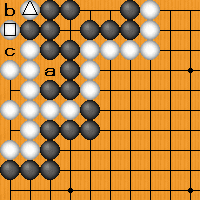
How do Japanese rules handle this?

For discussing go rule sets and rule theory
Post Reply
User avatar
CDavis7M
Lives in sente
Posts: 716
Joined: Tue Jun 15, 2010 2:18 pm
Rank: Shokyu
GD Posts: 0
Universal go server handle: CDavis7M
Has thanked: 109 times
Been thanked: 140 times
Contact:

Re: How do Japanese rules handle this?

Post by CDavis7M »

Cassandra wrote: There is simply NO "enable" in the current Japanese original of J89.
You continue to conclude on the basis of a translation into English of which we know neither the original Japanese text nor the extent to which it faithfully reflects the content intended at the time.
Now you are trying to tell me that the Japanese Rules don't use the term "enable"? :clap: I'm glad you figured it out but I already told you 2 months ago that the Japanese Rules do not use the term "enable." I am only using the term "enable" because other people rely on the English translation and even the English translation doesn't support their view.

From 2 months ago:
CDavis7M wrote:
Cassandra wrote:BTW, this stone is clearly "dead", as capturing it cannot "enable" anything.
It is questionable whether the rules describe stones having been captured as "enabling". This seems to be another point of misunderstanding.
----------
Cassandra wrote: "New", according to Oxford Advanced Learner's Dictionary, has the meaning of "not existing before", "recently made, invented, introduced, etc."
Advanced learner? Interesting to see the different definition. What comes after "advanced"? Maybe get the Concise next, or the Compact if you like to have fun.
------------
Cassandra wrote: "New", according to Oxford Advanced Learner's Dictionary, has the meaning of "not existing before", "recently made, invented, introduced, etc."

It has NOTHING to do with something like "could come into existence in another szenario".
By the way, talking about "new" shows a misunderstanding. The debate here has nothing to do with "new". No one is arguing that the stones are not new.

相手方の着手により取られない石、又は取られても新たに相手方に取られない石を生じうる石は「活き石」という。

The issue is not whether the stones are new (新た arata). The question is which capturable stones the uncapturable stones are created by or arise from (生じうる shojiuru). Is it the 1 capturable stone or the 5 capturable stones? It is the 1 stone alone because if the 1 stone is captured then White can create the uncapturable stone at the same point without the 5 stones being captured. The uncaptured stones are not created by the 5 captured stones nor do they result from the 5 captured stones, just the 1 stone alone. If 6 stones are captured (including the 1 stone and the 5 stones), that does not make the 5 stones alive separately. This only means that the 6 stones together are alive but that the 5 stones alone are dead and have dame.

Image
User avatar
CDavis7M
Lives in sente
Posts: 716
Joined: Tue Jun 15, 2010 2:18 pm
Rank: Shokyu
GD Posts: 0
Universal go server handle: CDavis7M
Has thanked: 109 times
Been thanked: 140 times
Contact:

Re: How do Japanese rules handle this?

Post by CDavis7M »

kvasir wrote:
Click Here To Show Diagram Code
[go]$$
$$ ----------------------
$$ | Q . Q . X C C O O . O
$$ | Q Q Q X W B O O O O O
$$ | X X X O C O O . O . .
$$ | X . X O O O O O . . .
$$ | . X X . . . . . . . .
$$ | X X . . . . . . . . .
$$ | . . . . . . . . . . .
$$ | . . . . . . . . . . .[/go]
To the argument that white can play there anyway or in a different way. I can only offer almost tautologies: "It is not white's turn to play." "Black is supposed to show a sequence that captures the triangle stones, not something else.
But if Black is attempting to confirm that the 5 white stones can be captured, then why is Black capturing a 6th stone that is separate from the 5 stones? That is the issue here. It shows that Black is NOT confirming the status of the 5 stones but is actually confirming the status of 6 stones.

Yes, Black can easily confirm the status of the 6 stones as being alive. But then Black will need to confirm the status of the 1 stone and the 5 stones separately. Black will determine that the 1 stone is alive independent from the 6 stones and that the 6 stones are only alive because the 1 stone is alive. Therefore, the 5 stones are dead.

A player cannot just pretend that stones are alive by playing a new stone with an already alive group.

---------------

If we are going to be reductionist -- if there is a ko then why doesn't it have to be dealt with? Why does White think they can get away without another move to resolve the ko?

----------
Let's change the position to be simple to show the point. :wt: is dead. White could easily have played a move in the game but since they didn't then they have dame at :ec:
Click Here To Show Diagram Code
[go]$$
$$ ----------------------
$$ | O . X . X . . O O . O
$$ | O O X X Q X O O O O O
$$ | X X X O C O O . O . .
$$ | X . X O O O O O . . .
$$ | . X X . . . . . . . .
$$ | X X . . . . . . . . .
$$ | . . . . . . . . . . .
$$ | . . . . . . . . . . .[/go]
White cannot prove that the 3 stones are alive this way.
Click Here To Show Diagram Code
[go]$$
$$ ----------------------
$$ | O 1 X . X . . O O . O
$$ | O O X X Q X O O O O O
$$ | X X X O 2 O O . O . .
$$ | X . X O O O O O . . .
$$ | . X X . . . . . . . .
$$ | X X . . . . . . . . .
$$ | . . . . . . . . . . .
$$ | . . . . . . . . . . .[/go]
Last edited by CDavis7M on Fri Dec 10, 2021 12:04 pm, edited 1 time in total.
John Fairbairn
Oza
Posts: 3724
Joined: Wed Apr 21, 2010 3:09 am
Has thanked: 20 times
Been thanked: 4672 times

Re: How do Japanese rules handle this?

Post by John Fairbairn »

相手方の着手により取られない石、又は取られても新たに相手方に取られない石を生じうる石は「活き石」という。

The question is which capturable stones the uncapturable stones are created by or arise from (生じうる shojiuru).
Not quite. SHOJIURU means 'CAN give rise to'. It's bungo (literary Japanese).

And ARATA NI (an adverb not an adjective) doesn't imply 'new' in the sense being taken here (new stones). Probably the best translation here is 'now' (i.e. in this new situation). The archetypal situation is given in the Japanese rules explanation: the snapback (pre-capture). As things stand, it looks as if side X can capture a Y stone, but when he does, Y can capture back several X stones (the ones that were originally in atari plus the capturing stones, i.e. the actual snapback or utte kaeshi). This Y capturing stone cannot NOW be captured. It is this situation that is 'newly produced'.
kvasir
Lives in sente
Posts: 1040
Joined: Sat Jul 28, 2012 12:29 am
Rank: panda 5 dan
GD Posts: 0
IGS: kvasir
Has thanked: 25 times
Been thanked: 187 times

Re: How do Japanese rules handle this?

Post by kvasir »

Click Here To Show Diagram Code
[go]$$
$$ ----------------------
$$ | O . O . X . . O . . O
$$ | O O O X W X O O O O O
$$ | X X X O . O O . O . .
$$ | X . X O O O O O . . .
$$ | . X X . . . . . . . .
$$ | X X . . . . . . . . .
$$ | . . . . . . . . . . .
$$ | . . . . . . . . . . .[/go]


This position is very similar to life and death examples 1 and 2. I don't think it is a stretch that black has to prevent white from rebirthing the marked white stone in the previous diagram, and prevent white from playing a new stone on the marked black stone in the next diagram.
Click Here To Show Diagram Code
[go]$$
$$ ----------------------
$$ | O . O . X . . O . . O
$$ | O O O X O B O O O O O
$$ | X X X O . O O . O . .
$$ | X . X O O O O O . . .
$$ | . X X . . . . . . . .
$$ | X X . . . . . . . . .
$$ | . . . . . . . . . . .
$$ | . . . . . . . . . . .[/go]
Playing on the marked point in the next diagram, 'a' in our previous posts, in exactly the same as life and death example 2. This is the reason I choice the sequence of making the throw-in before, it is bullet proof in the regard that there is no difference form life and death example 2.
Click Here To Show Diagram Code
[go]$$
$$ ----------------------
$$ | O . O . X C . O . . O
$$ | O O O X O X O O O O O
$$ | X X X O . O O . O . .
$$ | X . X O O O O O . . .
$$ | . X X . . . . . . . .
$$ | X X . . . . . . . . .
$$ | . . . . . . . . . . .
$$ | . . . . . . . . . . .[/go]
For reference, life and death example is black claiming the marked stones are alive because new stones can be played away from the captured stones:
Click Here To Show Diagram Code
[go]$$W
$$ ----------------------
$$ | 3 B O 4 O X . .
$$ | B 1 O 2 O X . .
$$ | O O O O X X . .
$$ | X X X X . . . . . . .
$$ | . . . . . . . . . . .
$$ | . . . . . . . . . . .[/go]
I don't see why we need to be so strict as to exclude the marked point in the next diagram, for example if white had that point already there would be no doubt that white was alive in the corner. What reason would we have to not allow the 'new stone' rule to apply for this point?
Click Here To Show Diagram Code
[go]$$
$$ ----------------------
$$ | O . O . X . C . . . O
$$ | O O O X O X O O O O O
$$ | X X X O . O O . O . .
$$ | X . X O O O O O . . .
$$ | . X X . . . . . . . .
$$ | X X . . . . . . . . .
$$ | . . . . . . . . . . .
$$ | . . . . . . . . . . .[/go]
The only thing different for the marked points in the next diagram is that they don't affect status confirmation in the regard that if white already occupied any of them it is still all the same. Do we really have any reason to exclude them? That would probably result in 'both players lose' situations because then there are effective moves, depending on the territory situation.
Click Here To Show Diagram Code
[go]$$
$$ ----------------------
$$ | O . O . X . . C C C O
$$ | O O O X O X O O O O O
$$ | X X X O . O O . O . .
$$ | X . X O O O O O . . .
$$ | . X X . . . . . . . .
$$ | X X . . . . . . . . .
$$ | . . . . . . . . . . .
$$ | . . . . . . . . . . .[/go]

I'll repeat that stating that the new stones could have been played anyway isn't the issue. Life and death example 1 even contradicts that claim.
Click Here To Show Diagram Code
[go]$$
$$ ----------------------
$$ | . X X O . .
$$ | O X X O . .
$$ | X O O O . .
$$ | X X X . . .
$$ | . . . . . .[/go]
Click Here To Show Diagram Code
[go]$$W
$$ ----------------------
$$ | 1 X X O . .
$$ | O X X O . .
$$ | X O O O . .
$$ | X X X . . .
$$ | . . . . . .[/go]
Click Here To Show Diagram Code
[go]$$W
$$ ----------------------
$$ | O 3 4 O . .
$$ | O 2 5 O . .
$$ | X O O O . .
$$ | X X X . . .
$$ | . . . . . .[/go]
Click Here To Show Diagram Code
[go]$$W
$$ ----------------------
$$ | 6 7 X O . .
$$ | . X O O . .
$$ | X O O O . .
$$ | X X X . . .
$$ | . . . . . .[/go]
Click Here To Show Diagram Code
[go]$$W
$$ ----------------------
$$ | X O 9 O . .
$$ | 8 X O O . .
$$ | X O O O . .
$$ | X X X . . .
$$ | . . . . . .[/go]


White can play :w7: and :w9: but life and death example 1 argues, as in the following diagrams, that white is alive because :w4: and :w6: can be played, those are the same points that white could play anyway in the previous diagram.
Click Here To Show Diagram Code
[go]$$B
$$ ----------------------
$$ | 1 X X O . .
$$ | O X X O . .
$$ | X O O O . .
$$ | X X X . . .
$$ | . . . . . .[/go]
Click Here To Show Diagram Code
[go]$$
$$ ----------------------
$$ | X X X O . .
$$ | 2 X X O . .
$$ | X O O O . .
$$ | X X X . . .
$$ | . . . . . .[/go]
Click Here To Show Diagram Code
[go]$$
$$ ----------------------
$$ | 5 4 6 O . .
$$ | O 3 . O . .
$$ | X O O O . .
$$ | X X X . . .
$$ | . . . . . .[/go]
CDavis7M wrote:A player cannot just pretend that stones are alive by playing a new stone with an already alive group.
I suppose most of the post up to now is is respond to Gerard, but I have also given detailed explanations why the new stones being played in these cases are different from playing stones that are part of alive groups in a previous post. Now I have expanded on this by showing it is same as in life and death example 1 and 2. These stones are always in an area that is critical to the removal of stones at the end of the game. I think that is fairly clear cut as an explanation goes, the rule text does gloss over the details so we can always choose to disagree completely.
User avatar
CDavis7M
Lives in sente
Posts: 716
Joined: Tue Jun 15, 2010 2:18 pm
Rank: Shokyu
GD Posts: 0
Universal go server handle: CDavis7M
Has thanked: 109 times
Been thanked: 140 times
Contact:

Re: How do Japanese rules handle this?

Post by CDavis7M »

John Fairbairn wrote:Not quite. SHOJIURU means 'CAN give rise to'. It's bungo (literary Japanese).

And ARATA NI (an adverb not an adjective) doesn't imply 'new' in the sense being taken here (new stones). Probably the best translation here is 'now' (i.e. in this new situation). The archetypal situation is given in the Japanese rules explanation: the snapback (pre-capture). As things stand, it looks as if side X can capture a Y stone, but when he does, Y can capture back several X stones (the ones that were originally in atari plus the capturing stones, i.e. the actual snapback or utte kaeshi). This Y capturing stone cannot NOW be captured. It is this situation that is 'newly produced'.
I appreciate the clarification. I did understand shojiuru meant a possibility. Arata ni referring to this new situation is changes perspective, but I think my understanding is still the same.

The snap back is the example in the explanation to this rule. Those are simple cases because there are connected stones and the snapback happens right away, without a ko as in the case we are discussing.
User avatar
CDavis7M
Lives in sente
Posts: 716
Joined: Tue Jun 15, 2010 2:18 pm
Rank: Shokyu
GD Posts: 0
Universal go server handle: CDavis7M
Has thanked: 109 times
Been thanked: 140 times
Contact:

Re: How do Japanese rules handle this?

Post by CDavis7M »

kvasir wrote: This position is very similar to life and death examples 1 and 2...

For reference, life and death example is black claiming the marked stones are alive because new stones can be played away from the captured stones:
Click Here To Show Diagram Code
[go]$$W
$$ ----------------------
$$ | 3 B O 4 O X . .
$$ | B 1 O 2 O X . .
$$ | O O O O X X . .
$$ | X X X X . . . . . . .
$$ | . . . . . . . . . . .
$$ | . . . . . . . . . . .[/go]
...Now I have expanded on this by showing it is same as in life and death example 1 and 2. These stones are always in an area that is critical to the removal of stones at the end of the game. I think that is fairly clear cut as an explanation goes, the rule text does gloss over the details so we can always choose to disagree completely.
I disagree. This example is not similar because the L&D status of the 2 marked black stones are not independent. There's no possibility of only one of the stones being captured without the other, where that one stone causes a new uncapturable stone while ignoring the other stone. This is one difference. There are two different groups of stones. Another difference is that the position has a ko without a snapback while the Rules Example has an immediate snapback without a ko.

The position we've been discussing has 1 White stone that is independently alive without the 5 stones and the 6 stones are only alive by virtue of the 1 White stone already being alive.

This goes back to what "confirmation" means. If the 1 stone can be deemed alive independently, there is nothing left to confirm about it's status. The status of a separate group of 5 stones cannot be based on the 1 independently alive stone because that does not "confirm" anything -- the 1 stone can be deemed alive separately. The 5 stones are extraneous.

----------

If we want to count similarities, this position is similar to Example 24 where there are different groups of separate stones and a ko. The difference being that the ko-stone here is alive and the 5 stones are dead, while in Ex.24 the :wt: ko-stone is dead and the other stones are alive. But that is due to the different position. The rationale is the same.

Image
User avatar
CDavis7M
Lives in sente
Posts: 716
Joined: Tue Jun 15, 2010 2:18 pm
Rank: Shokyu
GD Posts: 0
Universal go server handle: CDavis7M
Has thanked: 109 times
Been thanked: 140 times
Contact:

Re: How do Japanese rules handle this?

Post by CDavis7M »

Gérard TAILLE wrote:
Click Here To Show Diagram Code
[go]$$
$$ ----------------------
$$ | Q . Q . X C C C C C C C C C O . O . O |
$$ | Q Q Q X O X O O O O O O O O O O O O O |
$$ | X X X O C O O . . . . . . . . . . . . |
$$ | X . X O O O . . . . . . . . . . . . . |
$$ | . X X . . . . . . . . . . . . . . . . |
$$ | X X . . . . . . . . . . . . . . . . . |
$$ | . . . . . . . . . . . . . . . . . . . |
$$ | . . . . . . . . . . . . . . . . . . . |[/go]
In this diagram which marked intersections are related or unrelated to the status of five white marked stones in the corner?
My understanding of L&D "confirmation" is that none of those intersections are related to the status of the 5 marked stones. Most of those intersections are not related to any L&D status. Only the 1 closest marked intersection is relevant and it is to the 1 ko-stone alone, not the 5 stones or the group with 2 eyes.
Gérard TAILLE
Gosei
Posts: 1346
Joined: Sun Aug 23, 2020 2:47 am
Rank: 1d
GD Posts: 0
Has thanked: 21 times
Been thanked: 57 times

Re: How do Japanese rules handle this?

Post by Gérard TAILLE »

Click Here To Show Diagram Code
[go]$$
$$ ----------------------
$$ | W . W . X . . . O . O
$$ | W W W X Q X O O O O O
$$ | X X X O . O O . O . .
$$ | X . X O O O O O . . .
$$ | . X X . . . . . . . .
$$ | X X . . . . . . . . .
$$ | . . . . . . . . . . .
$$ | . . . . . . . . . . .[/go]
What about this other way for white to prove that the two marked groups are alive:

Sequence 1 proving that the group with only one stone is alive:
Click Here To Show Diagram Code
[go]$$B :w2: pass for ko, :w4: takes ko, :w6: connects ko
$$ ----------------------
$$ | O 5 O 3 X 7 . . O . O
$$ | O O O X Q X O O O O O
$$ | X X X O 1 O O . O . .
$$ | X . X O O O O O . . .
$$ | . X X . . . . . . . .
$$ | X X . . . . . . . . .
$$ | . . . . . . . . . . .
$$ | . . . . . . . . . . .[/go]
Sequence 2 proving that the group with 5 stones is alive:
Click Here To Show Diagram Code
[go]$$B :w2: pass-for-ko, :b7: connects ko
$$ ----------------------
$$ | W 5 W 3 X 6 4 . O . O
$$ | W W W X O X O O O O O
$$ | X X X O 1 O O . O . .
$$ | X . X O O O O O . . .
$$ | . X X . . . . . . . .
$$ | X X . . . . . . . . .
$$ | . . . . . . . . . . .
$$ | . . . . . . . . . . .[/go]
User avatar
CDavis7M
Lives in sente
Posts: 716
Joined: Tue Jun 15, 2010 2:18 pm
Rank: Shokyu
GD Posts: 0
Universal go server handle: CDavis7M
Has thanked: 109 times
Been thanked: 140 times
Contact:

Re: How do Japanese rules handle this?

Post by CDavis7M »

Gérard TAILLE wrote: Sequence 1 proving that the group with only one stone is alive:
Click Here To Show Diagram Code
[go]$$B :w2: pass, :w4: takes, :w6: connect || :w2: pass, :b3: pass, :w4: retake :b5: pass, :w6: connect || :w2: pass, :b3: connect, :b5: pass, :b7: pass
$$ ----------------------
$$ | O 5 O 3 X 7 . . O . O-O . O . X . . . O . O-O . O 8 X 6 4 . O . O
$$ | O O O X Q X O O O O O-O O O X Q X O O O O O-O O O X Q X O O O O O
$$ | X X X O 1 O O . O . .-X X X O 1 O O . O . .-X X X O 1 O O . O . .
$$ | X . X O O O O O . . .-X . X O O O O O . . .-X . X O O O O O . . .
$$ | . X X . . . . . . . .-. X X . . . . . . . .-. X X . . . . . . . .
$$ | X X . . . . . . . . .-X X . . . . . . . . .-X X . . . . . . . . .
$$ | . . . . . . . . . . .-. . . . . . . . . . .-. . . . . . . . . . .
$$ | . . . . . . . . . . .-. . . . . . . . . . .-. . . . . . . . . . .[/go]
Sure. Though :b7: would not happen. This is similar to the middle diagram where :b3: passes (not for ko) without attempting to capture the 5 stones whose L&D are not being confirmed.
Though I think if Black were confirming the L&D of the 1 stone alone, maybe they would connect to prevent White from retaking as in the variation on the right. In this variation :w8: is the stone that is uncapturable because of the 1 stone being captured and that shows life.
Gérard TAILLE wrote: Sequence 2 proving that the group with 5 stones is alive:
Click Here To Show Diagram Code
[go]$$B :w2: pass-for-ko, :b7: connects ko || Result
$$ ----------------------
$$ | W 5 W 3 X 6 4 . O . O-. X . X X Q Q . O . O
$$ | W W W X O X O O O O O-. . . X X X O O O O O
$$ | X X X O 1 O O . O . .-X X X O X O O . O . .
$$ | X . X O O O O O . . .-X . X O O O O O . . .
$$ | . X X . . . . . . . .-. X X . . . . . . . .[/go]
So when Black attempts to show that the 5 White stones are dead, White passes for the ko but does not retake the ko and instead adds stones connected to an already alive group? This doesn't seem like White is actually trying to prevent the 5 stones from being captured not is White attempting to use their capture to create an uncapturable stone. But might as well play it this way because it has the same result as if White had retaken the ko and connected directly or indirectly back to the group with 2 eyes. Both ways do not show that 5 White stones are alive. They only shows that it is possible to play a stone that cannot be captured because it is connected to group that already has 2 eyes.
User avatar
CDavis7M
Lives in sente
Posts: 716
Joined: Tue Jun 15, 2010 2:18 pm
Rank: Shokyu
GD Posts: 0
Universal go server handle: CDavis7M
Has thanked: 109 times
Been thanked: 140 times
Contact:

Re: How do Japanese rules handle this?

Post by CDavis7M »

For the people that think the 5 stones are alive, I'm curious: Why is :wt: is not alive because of :w2: ?
Click Here To Show Diagram Code
[go]$$
$$ ----------------------
$$ | b Q X X . . X O . . .-| 1 Q X X . . X O . . .-| X 3 X X . . X O . . .
$$ | O X X . X X X O . . .-| O X X . X X X O . . .-| O X X . X X X O . . .
$$ | . O X X O O O O . . .-| 2 O X X O O O O . . .-| @ O X X O O O O . . .
$$ | O O O X O . . . . . .-| O O O X O . . . . . .-| O O O X O . . . . . .
$$ | . O X X O . . . . . .-| . O X X O . . . . . .-| . O X X O . . . . . .
$$ | O O O O X . . . . . .-| O O O O X . . . . . .-| O O O O X . . . . . .
$$ | . O X X X . . . . . .-| . O X X X . . . . . .-| . O X X X . . . . . .
$$ | O O X . . . . . . . .-| O O X . . . . . . . .-| O O X . . . . . . . .
$$ | X X X . . . . . . . .-| X X X . . . . . . . .-| X X X . . . . . . . .[/go]
kvasir
Lives in sente
Posts: 1040
Joined: Sat Jul 28, 2012 12:29 am
Rank: panda 5 dan
GD Posts: 0
IGS: kvasir
Has thanked: 25 times
Been thanked: 187 times

Re: How do Japanese rules handle this?

Post by kvasir »

CDavis7M wrote:For the people that think the 5 stones are alive, I'm curious: Why is :wt: is not alive because of :w2: ?
Click Here To Show Diagram Code
[go]$$
$$ ----------------------
$$ | b Q X X . . X O . . .-| 1 Q X X . . X O . . .-| X 3 X X . . X O . . .
$$ | O X X . X X X O . . .-| O X X . X X X O . . .-| O X X . X X X O . . .
$$ | . O X X O O O O . . .-| 2 O X X O O O O . . .-| @ O X X O O O O . . .
$$ | O O O X O . . . . . .-| O O O X O . . . . . .-| O O O X O . . . . . .
$$ | . O X X O . . . . . .-| . O X X O . . . . . .-| . O X X O . . . . . .
$$ | O O O O X . . . . . .-| O O O O X . . . . . .-| O O O O X . . . . . .
$$ | . O X X X . . . . . .-| . O X X X . . . . . .-| . O X X X . . . . . .
$$ | O O X . . . . . . . .-| O O X . . . . . . . .-| O O X . . . . . . . .
$$ | X X X . . . . . . . .-| X X X . . . . . . . .-| X X X . . . . . . . .[/go]
Because the connection is not a new stone because it is part of old stones. Similar to how I explained before if the marked stone is removed from the board at the end of the game then the boarder between black and white is not affected by the marked stone in the 3rd diagram. The marked stone in the 3rd diagram is therefore part of the old stones.

Let's try this again.
Click Here To Show Diagram Code
[go]$$
$$ ----------------------
$$ | W C W C B C C O O . O
$$ | W W W B W B O O O O O
$$ | X X X O . O O . O . .
$$ | X . X O O O O O . . .
$$ | . X X . . . . . . . .
$$ | X X . . . . . . . . .
$$ | . . . . . . . . . . .
$$ | . . . . . . . . . . .[/go]
The marked points and stones in the previous diagrams would be on the boarder of black and white if the white is dead in the corner and the dead stones are removed.

Maybe the single point in this diagram might be outside of the set of boarder points because the 1 stone could be considered alive anyway. All of the white stones are actually alive, but maybe it could be considered if the marked point is different.
Click Here To Show Diagram Code
[go]$$
$$ ----------------------
$$ | O . O . X . . O O . O
$$ | O O O X O X O O O O O
$$ | X X X O M O O . O . .
$$ | X . X O O O O O . . .
$$ | . X X . . . . . . . .
$$ | X X . . . . . . . . .
$$ | . . . . . . . . . . .
$$ | . . . . . . . . . . .[/go]
What you, CDavis7M, seem to be claiming is that the following sequence does not show that the white is alive.
Click Here To Show Diagram Code
[go]$$ :w4: pass for :b3:
$$ ----------------------
$$ | O . O . X 2 3 O O . O
$$ | O O O X O X O O O O O
$$ | X X X O 1 O O . O . .
$$ | X . X O O O O O . . .
$$ | . X X . . . . . . . .
$$ | X X . . . . . . . . .
$$ | . . . . . . . . . . .
$$ | . . . . . . . . . . .[/go]
Click Here To Show Diagram Code
[go]$$Bcm5
$$ ----------------------
$$ | O 3 O 1 X 2 X O O . O
$$ | O O O X 4 X O O O O O
$$ | X X X O X O O . O . .
$$ | X . X O O O O O . . .
$$ | . X X . . . . . . . .
$$ | X X . . . . . . . . .
$$ | . . . . . . . . . . .
$$ | . . . . . . . . . . .[/go]
Your reason seems to be that the marked point is unoccupied, making the position different from example 2 because the 'new stones' are separated from the corner by a gap of a single empty point.
Click Here To Show Diagram Code
[go]$$
$$ ----------------------
$$ | O . O M X . . O O . O
$$ | O O O X O X O O O O O
$$ | X X X O . O O . O . .
$$ | X . X O O O O O . . .
$$ | . X X . . . . . . . .
$$ | X X . . . . . . . . .
$$ | . . . . . . . . . . .
$$ | . . . . . . . . . . .[/go]
Then what about this position, is it not exactly the same as example 2? The new stones are not separated but in direct contact, just as in example 2.
Click Here To Show Diagram Code
[go]$$
$$ ----------------------
$$ | O . . O X X . . O O . O
$$ | O O O O X O X O O O O O
$$ | X X X X O . O O . O . .
$$ | X . X X O O O O O . . .
$$ | . X X . . . . . . . .
$$ | X X . . . . . . . . .
$$ | . . . . . . . . . . .
$$ | . . . . . . . . . . .[/go]
jann
Lives in gote
Posts: 445
Joined: Tue May 14, 2019 8:00 pm
GD Posts: 0
Been thanked: 37 times

Re: How do Japanese rules handle this?

Post by jann »

There is a straightforward meaning of "capturing them would enable", but different interpretations may also be possible. The vague specification of the rule may also be intentional, to avoid a possibly incorrect definition, and convey a general intention instead (captures need to be clean without any strings attached).
Click Here To Show Diagram Code
[go]$$
$$ ----------------------
$$ | O . O . X a . O b . O
$$ | O O O X W X O O O O O
$$ | X X X O . O O . O . .
$$ | X . X O O O O O . . .
$$ | . X X . . . . . . . .
$$ | X X . . . . . . . . .
$$ | . . . . . . . . . . .[/go]
Would B capturing 5 stones in the corner necessarily enable W to play a new stone under his marked ko stone? In a direct sense yes, as W cannot play a new stone there originally (thus it was only made possible in the course of the capture), and the corner cannot be captured without allowing W to play an uncapturable stone there.

Lightvector offered the following simplification of his example for the same question (ignore that reinforcement is forceable in game even vs excess W threats, suppose both pass here):
Click Here To Show Diagram Code
[go]$$
$$ | . . . . . .
$$ | X X X X X .
$$ | X O O O . .
$$ | W X X O . .
$$ | . X O O . .
$$ | X X O . . .
$$ | O X O . . .
$$ | . O O . . .
$$ -----------[/go]
Is the marked W stone alive? Capturing it would enable W to play a new stone either under it or under his ko stone, depending on what B tries. Deciding this is still the same question as above (preparatory sacrificial capture for liberty).

There are various interpretations, during the years there were at least 3-4 suggested. It also cannot be excluded that Davies missed real J89 intentions, but given his experience in both go and even go rules the first assumption should still be that his version is solid (and harder to misunderstand than autotranslations of the Japanese).

The advantage of the straightforward/traditional interpretation is direct applicability to any example, without excuses or handwaving. Can the attacker capture without the defender playing a certain permanent stone? Could he play that stone anyway, was it already possible in the starting position even if the attacker tried to prevent it? These can be proven/disproven easily.

Any interpretation should also look at example 4, a case unlike usual snapback/nakade, where the new stones are made possible by B's first approach move, ie. not the capture itself but its necessary preparatory move already, and by the time of the capture the new stones are even played already (shown in the commentary, with a minor caveat). Locality ideas also seem poor match for the commentary examples showing the (lack of, under pass-for-ko) possible interactions between remote groups.

Btw, killing in these examples (not recognizing the enabled stone) could also affect capturing races. Normally a ko can provide one move in a race, but pass-for-ko can change this to two. May not be a practical problem/example (since reinforcement is forceable in game again), but suppose both passed here:
Click Here To Show Diagram Code
[go]$$
$$ | -------------------------------------
$$ | . X O . O . O a O O . W X . X . O X |
$$ | X X O O O O O O X O O X X X X O O X |
$$ | . X X X X X X X X X X O O O O O . X |
$$ | -------------------------------------[/go]
No ko threats, W is safe with territory in normal go. But B can capture the right under pass-for-ko. W needs his upcoming re-play of the marked stone recognized as enabled by B's capture of the corner, to avoid a poor ruling.
Gérard TAILLE
Gosei
Posts: 1346
Joined: Sun Aug 23, 2020 2:47 am
Rank: 1d
GD Posts: 0
Has thanked: 21 times
Been thanked: 57 times

Re: How do Japanese rules handle this?

Post by Gérard TAILLE »

CDavis7M wrote:
Gérard TAILLE wrote: Sequence 1 proving that the group with only one stone is alive:
Click Here To Show Diagram Code
[go]$$B :w2: pass, :w4: takes, :w6: connect || :w2: pass, :b3: pass, :w4: retake :b5: pass, :w6: connect || :w2: pass, :b3: connect, :b5: pass, :b7: pass
$$ ----------------------
$$ | O 5 O 3 X 7 . . O . O-O . O . X . . . O . O-O . O 8 X 6 4 . O . O
$$ | O O O X Q X O O O O O-O O O X Q X O O O O O-O O O X Q X O O O O O
$$ | X X X O 1 O O . O . .-X X X O 1 O O . O . .-X X X O 1 O O . O . .
$$ | X . X O O O O O . . .-X . X O O O O O . . .-X . X O O O O O . . .
$$ | . X X . . . . . . . .-. X X . . . . . . . .-. X X . . . . . . . .
$$ | X X . . . . . . . . .-X X . . . . . . . . .-X X . . . . . . . . .
$$ | . . . . . . . . . . .-. . . . . . . . . . .-. . . . . . . . . . .
$$ | . . . . . . . . . . .-. . . . . . . . . . .-. . . . . . . . . . .[/go]
Sure. Though :b7: would not happen. This is similar to the middle diagram where :b3: passes (not for ko) without attempting to capture the 5 stones whose L&D are not being confirmed.
Though I think if Black were confirming the L&D of the 1 stone alone, maybe they would connect to prevent White from retaking as in the variation on the right. In this variation :w8: is the stone that is uncapturable because of the 1 stone being captured and that shows life.
Gérard TAILLE wrote: Sequence 2 proving that the group with 5 stones is alive:
Click Here To Show Diagram Code
[go]$$B :w2: pass-for-ko, :b7: connects ko || Result
$$ ----------------------
$$ | W 5 W 3 X 6 4 . O . O-. X . X X Q Q . O . O
$$ | W W W X O X O O O O O-. . . X X X O O O O O
$$ | X X X O 1 O O . O . .-X X X O X O O . O . .
$$ | X . X O O O O O . . .-X . X O O O O O . . .
$$ | . X X . . . . . . . .-. X X . . . . . . . .[/go]
So when Black attempts to show that the 5 White stones are dead, White passes for the ko but does not retake the ko and instead adds stones connected to an already alive group? This doesn't seem like White is actually trying to prevent the 5 stones from being captured not is White attempting to use their capture to create an uncapturable stone. But might as well play it this way because it has the same result as if White had retaken the ko and connected directly or indirectly back to the group with 2 eyes. Both ways do not show that 5 White stones are alive. They only shows that it is possible to play a stone that cannot be captured because it is connected to group that already has 2 eyes.
OK CDavis7M I can improve my sequences:

Sequence 1 proving that the group with only one stone is alive:
Click Here To Show Diagram Code
[go]$$B :w2: pass for ko
$$ ----------------------
$$ | O . O . X . . . O . O
$$ | O O O X Q X O O O O O
$$ | X X X O 1 O O . O . .
$$ | X . X O O O O O . . .
$$ | . X X . . . . . . . .
$$ | X X . . . . . . . . .
$$ | . . . . . . . . . . .
$$ | . . . . . . . . . . .[/go]
and because black cannot connect the ko with :b3: white will be able to retake the ko and connect proving that the group of one white stone is alive.

Sequence 2 proving that the group with 5 stones is alive
Click Here To Show Diagram Code
[go]$$B :w4: at "a"
$$ ----------------------
$$ | W 5 W 3 X a 2 . O . O
$$ | W W W X O X O O O O O
$$ | X X X O 1 O O . O . .
$$ | X . X O O O O O . . .
$$ | . X X . . . . . . . .
$$ | X X . . . . . . . . .
$$ | . . . . . . . . . . .
$$ | . . . . . . . . . . .[/go]
and because black cannot play at "a" with :b3: white is able to play herself at "a". Then taking into account that you always considered a stone at "a" being here a new uncapturable stone then I conclude the group of 5 white stones is alive
User avatar
CDavis7M
Lives in sente
Posts: 716
Joined: Tue Jun 15, 2010 2:18 pm
Rank: Shokyu
GD Posts: 0
Universal go server handle: CDavis7M
Has thanked: 109 times
Been thanked: 140 times
Contact:

Re: How do Japanese rules handle this?

Post by CDavis7M »

kvasir wrote:
CDavis7M wrote:For the people that think the 5 stones are alive, I'm curious: Why is :wt: is not alive because of :w2: ?
Because the connection is not a new stone because it is part of old stones.
This is the same reason why the 5 stones are not alive. The 6 stones are alive but the 5 stones alone are not alive.
kvasir wrote:What you, CDavis7M, seem to be claiming is that the following sequence does not show that the white is alive.
I am not claiming that "white" is not alive. I am claiming that a subset of the stones are not alive. The White stones are clearly alive since they have 2 eyes and cannot be captured. The 6 stones are clearly alive because they can create new stones that are uncapturable. But the 5 White stones considered separately are not alive because any uncapturable stones are not a new stone because it is part of old stones.
kvasir wrote: Your reason seems to be that the marked point is unoccupied, making the position different from example 2 because the 'new stones' are separated from the corner by a gap of a single empty point.
No, my reasoning does not rely on the marked point or anything being occupied or not. My reasoning is based on the meaning of the word "confirmation". It is based on whether capturable stones are can create new uncapturable stones themselves (confirming their own life) or if it is really other stones that independently have life (which can be confirmed separately). In the case we are discussing, the group with 2 eyes and the 1 stone have life independently. The 5 stones cannot have life independent of the 1 stone and there is nothing added by the 5 stones. Because the 5 stones are completely dependent on the 1 stone for life, then there is nothing left to "confirm" about L&D status after confirming the 1 stone. If there is nothing left to confirm, then the 5 stones cannot be deemed alive.

----------
kvasir wrote:
Click Here To Show Diagram Code
[go]$$
$$ ----------------------
$$ | O . O M X . . O O . O
$$ | O O O X O X O O O O O
$$ | X X X O . O O . O . .
$$ | X . X O O O O O . . .
$$ | . X X . . . . . . . .
$$ | X X . . . . . . . . .
$$ | . . . . . . . . . . .
$$ | . . . . . . . . . . .[/go]
Then what about this position, is it not exactly the same as example 2? The new stones are not separated but in direct contact, just as in example 2.
Click Here To Show Diagram Code
[go]$$
$$ ----------------------
$$ | O . . O X X . . O O . O
$$ | O O O O X O X O O O O O
$$ | X X X X O . O O . O . .
$$ | X . X X O O O O O . . .
$$ | . X X . . . . . . . .
$$ | X X . . . . . . . . .
$$ | . . . . . . . . . . .
$$ | . . . . . . . . . . .[/go]
Yes, my same reasoning applies to both. In this new situation, the 7 stones are alive but it is because the 1 stone is independently alive. The 6 stones in the corner are dead and have dame.

Confirmation that the 1 stone is alive independently. Capturing the 5 stones does not impact the L&D of the 1 stone. The 5 stones add nothing to the life of the 1 stone. Adding stones to already alive stones cannot prove the life of a separate group of stones. The corner White stones are dead.
Click Here To Show Diagram Code
[go]$$ :w2: pass, :b3: above 1 || :w4: pass, :w6: above 1, :w8: at 2 || :w4: pass, oiotoshi: :b5: pass, :w6: above 1, :b7: pass, :w8: captures
$$ ----------------------
$$ | O . . O X X 4 . O O . O-O 7 5 O X X 2 3 O O . O-O . . O X X 2 3 O O . O
$$ | O O O O X O X O O O O O-O O O O X O X O O O O O-O O O O X O X O O O O O
$$ | X X X X O 1 O O . O . .-X X X X O 1 O O . O . .-X X X X O 1 O O . O . .
$$ | X . X X O O O O O . . .-X . X X O O O O O . . .-X . X X O O O O O . . .
$$ | . X X . . . . . . . . .-. X X . . . . . . . . .-. X X . . . . . . . . .
$$ | X X . . . . . . . . . .-X X . . . . . . . . . .-X X . . . . . . . . . .[/go]
kvasir
Lives in sente
Posts: 1040
Joined: Sat Jul 28, 2012 12:29 am
Rank: panda 5 dan
GD Posts: 0
IGS: kvasir
Has thanked: 25 times
Been thanked: 187 times

Re: How do Japanese rules handle this?

Post by kvasir »

Sorry, I just don't comprehend what you mean.

Are you saying that the 5 stones are alive because the 1 stone is alive or are you saying that the 5 stones are dead because the 1 stone is alive? That doesn't seem right.

Words like "independent" and "dependent" convey powerful ideas but it is often not clear what that idea is. I do not for one thing understand what you mean by the 1 stone being "independent" of the 5 stones (or how to state what you meant) when the 5 stones are "dependent" on the 1 stone.

I'd grant that the 1 and 5 stones are dependent (without definition) but I don't comprehend what relation you mean and why it is not symmetric, as in 1 being dependent on 5 if and only if 5 is dependent on 1. Also I don't understand what you mean by doing status confirmation for the 5+1 stones together or what that has to with if the 5 stones are alive or not.

I didn't get further than this in my understanding of what you explained.
Post Reply