jann wrote:
Would B capturing 5 stones in the corner necessarily enable W to play a new stone under his marked ko stone? In a direct sense yes, as W cannot play a new stone there originally (thus it was only made possible in the course of the capture), and the corner cannot be captured without allowing W to play an uncapturable stone there.
There is a misunderstanding of what the word "direct" means. Direct in this context would mean "
without intervening factors or intermediaries." In this example, the 1 White stone that must be captured before capturing the 5 stones is an intervening factor or intermediary. Therefore, capturing the 5 stones in the corner does not "directly" enable White to play a new stone. Instead, it is the capture of the 1 stone that directly enables White to play the uncapturable stones. This is the reason that the 5 stones are dead.
Also, the statement that the "
corner cannot be captured without allowing W to play an uncapturable stone there" shows a misunderstanding. First, in this example White is NOT playing "there" because the new stones are not in the corner. Second, it is
always possible in the stopped-game state of a Go game under Japanese Rules to show that stones cannot be captured without allowing the opponent to play an uncapturable stone (filling dame or territory, etc.). This is by virtue of alternating play and does not confirm L&D. This statement is unrelated to L&D confirmation.
---------------
jann wrote:
Lightvector offered the following simplification of his example for the same question (ignore that reinforcement is forceable in game even vs excess W threats, suppose both pass here).
Is the marked W stone alive? Capturing it would enable W to play a new stone either under it or under his ko stone, depending on what B tries. Deciding this is still the same question as above (preparatory sacrificial capture for liberty).
Well then this is not a valid end-game position according to the Japanese Rules because it violates Article 1. This is why the Japanese Rules are sure that the players know when they need to make moves during the game and when they do not. But let's put this aside for a second and consider the position as is.
$$
$$ | . . . . . .
$$ | X X X X X .
$$ | X O O O . .
$$ | W X X O . .
$$ | a X O O . .
$$ | X X O . . .
$$ | Q X O . . .
$$ | . O O . . .
$$ -----------
- Click Here To Show Diagram Code
[go]$$

$$ | . . . . . .

$$ | X X X X X .

$$ | X O O O . .

$$ | W X X O . .

$$ | a X O O . .

$$ | X X O . . .

$$ | Q X O . . .

$$ | . O O . . .

$$ -----------[/go]
The

stone is dead. The 6 black stones are dead. So point 'a' is dame. White can play teire during the game or in L&D confirmation to make
alive and then make point 'a' become territory (and the black stones will become prisoners).
The
stone is dead when considered separately because if

is considered separately then it is independently alive while
is only alive when considering the 2 stones together.
--Variation 1 shows why
is independently alive. Black does not capture
because it doesn't matter. Black does not try to prevent his capture because it doesn't matter if Black is captured. What matter is whether
is alive when confiring the status of
.
--In Variation 2, Black does capture
but again, it doesn't matter when confirming the status of
. The stone
is alive because it can always connect back to alive stones. So it IS connected (even if loosely) to those alive stones.
--Variation 3 attempts to show why the the 1 stones
is alive separately. Some might argue that
is alive because
can connect to the alive stones. But wait, this is exactly the same reason why
is independently alive. Varition 3 does not "confirm" anything because there is nothing unknown that is being determined. The life of
could already be determined. Adding a new stone to stones that are independently alive cannot show that other stones are alive. So
is dead when considered separately and White has dame unless White teire.
$$ Var.1: :w2: pass, :b3: pass, :w4: above 1, :b5: pass, :w6: connect \n Var.2: :w2: pass, :w4: above 1, :b5: connect, :w6: connect. \n Var.2: :w2: pass, :w4: above 1, :b5: connect, :w6: connect.
$$ | . . . . . .-. . . . . .--. . . . . .
$$ | X X X X X .-X X X X X .--X X X X X .
$$ | X O O O . .-X O O O . .--X O O O . .
$$ | W X X O . .-W X X O . .--W X X O . .
$$ | . X O O . .-3 X O O . .--3 X O O . .
$$ | X X O . . .-X X O . . .--X X O . . .
$$ | Q X O . . .-Q X O . . .--Q X O . . .
$$ | 1 O O . . .-1 O O . . .--1 O O . . .
$$ -----------
- Click Here To Show Diagram Code
[go]$$  Var.1: :w2: pass,  :b3: pass,  :w4: above 1,  :b5: pass,  :w6: connect \n Var.2:  :w2: pass,  :w4: above 1,  :b5: connect,  :w6: connect. \n Var.2:  :w2: pass,  :w4: above 1,  :b5: connect,  :w6: connect.

$$ | . . . . . .-. . . . . .--. . . . . .

$$ | X X X X X .-X X X X X .--X X X X X .

$$ | X O O O . .-X O O O . .--X O O O . .

$$ | W X X O . .-W X X O . .--W X X O . .

$$ | . X O O . .-3 X O O . .--3 X O O . .

$$ | X X O . . .-X X O . . .--X X O . . .

$$ | Q X O . . .-Q X O . . .--Q X O . . .

$$ | 1 O O . . .-1 O O . . .--1 O O . . .

$$ -----------[/go]
--------
jann wrote:
Any interpretation should also look at example 4, a case unlike usual snapback/nakade, where the new stones are made possible by B's first approach move, ie. not the capture itself but its necessary preparatory move already, and by the time of the capture the new stones are even played already (shown in the commentary, with a minor caveat). Locality ideas also seem poor match for the commentary examples showing the (lack of, under pass-for-ko) possible interactions between remote groups.
The thing about example 4 is that the separate groups of White stones are not alive
independently. One group's life is dependent on the life of the other. When considered separately, they are both dead. One major difference in Example 4 is that the stones are seki. No one is pretending that the live stones in example 4 have territory. All of the positions we are discussing, someone is asking whether one play has territory.
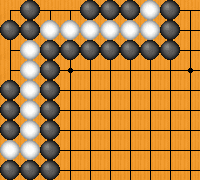
As for "locality," I agree that is irrelevant. My understanding of L&D "confirmation" is based on the definition of "
confirmation" which requires consideration of dependencies (can status already be confirmed or is something left unknown and yet to be confirmed). The position of the new stone only matter if it is uncapturable because of other stones that can already be deemed alive separately.
----------
jann wrote:
Btw, killing in these examples (not recognizing the enabled stone) could also affect capturing races. Normally a ko can provide one move in a race, but pass-for-ko can change this to two. May not be a practical problem/example (since reinforcement is forceable in game again), but suppose both passed here:
$$
$$ | -------------------------------------
$$ | . X O . O . O a O O . W X . X . O X |
$$ | X X O O O O O O X O O X X X X O O X |
$$ | . X X X X X X X X X X O O O O O . X |
$$ | -------------------------------------
- Click Here To Show Diagram Code
[go]$$

$$ | -------------------------------------

$$ | . X O . O . O a O O . W X . X . O X |

$$ | X X O O O O O O X O O X X X X O O X |

$$ | . X X X X X X X X X X O O O O O . X |

$$ | -------------------------------------[/go]
No ko threats, W is safe with territory in normal go. But B can capture the right under pass-for-ko. W needs his upcoming re-play of the marked stone recognized as enabled by B's capture of the corner, to avoid a poor ruling.
--The 22 White stones are alive because 9 of them cannot be captured at all, so 22 cannot be captured.
--The 9 White stones are alive because they have 2 eyes and cannot be captured.
--The 4 White stones are alive because the
cannot be captured because if Black captures
then the 4 stones can connect back. There's no question of "new" or "uncapturable." The 4 stones cannot be captured in the first place.
--The 1
stone is alive. This is because even if Black captures it, a new stone can be played at the same intersection and connect back. This is the same reason why the 1 ko-stone in "Variation B" (discussed above) is alive.
--The 8 White stones on the right are dead. Because any attempt to provide a new uncapturable stone relies on the fact that
can already create a new uncapturable stones on it's own independent of the 8 White stones being captured or not.
Confirmation that
is alive, separate from the capture of the 8 stones.
--In Variation 1, Black does not try to capture the 8 stones because their L&D is not being confirmed.
--In Variation 2, Black does capture the 8 stones but this does not add anything beyond Variation 1.
Trying to show that the 8 stones are alive using Variation 2 again does not "confirm" anything that is not already know.
is alive but the 8 White stones are dead.
$$ Var.1: :b3: pass, :w4: pass, :b5: pass, :w6: retake, :b7: pass, :w8: connect \n Var.2: :b3: connect, :b5: right of 4, :b7: above :b5:
$$ | -------------------------------------
$$ | . X O . O . O 2 O O 1 W X . X . O X |-. X O . O . O 2 O O 1 W X 8 X 6 O X |
$$ | X X O O O O O O X O O X X X X O O X |-X X O O O O O O X O O X X X X O O X |
$$ | . X X X X X X X X X X O O O O O . X |-. X X X X X X X X X X O O O O O 4 X |
$$ | -------------------------------------
- Click Here To Show Diagram Code
[go]$$ Var.1:  :b3: pass,  :w4: pass,  :b5: pass,  :w6: retake,  :b7: pass,  :w8: connect \n Var.2: :b3: connect, :b5: right of 4,  :b7: above :b5:

$$ | -------------------------------------

$$ | . X O . O . O 2 O O 1 W X . X . O X |-. X O . O . O 2 O O 1 W X 8 X 6 O X |

$$ | X X O O O O O O X O O X X X X O O X |-X X O O O O O O X O O X X X X O O X |

$$ | . X X X X X X X X X X O O O O O . X |-. X X X X X X X X X X O O O O O 4 X |

$$ | -------------------------------------[/go]
White needs teire, in the game or in L&D confirmation.

 , AFTER Black captured her single stone. White would never play there, if Black did not capture her stone before.
 before.
 AFTER her stones in the corner were captured, so her corner stones are alive.
 , instead, and follow the well-known sequence thereafter.
 white is able to play herself at "a". Then taking into account that you always considered a stone at "a" being here a new uncapturable stone then I conclude the group of 5 white stones is alive
 points in the relevant area -- which could be taken by White -- can be considered being / becoming part of an already alive group of hers.
 and
and  but life and death example 1 argues, as in the following diagrams, that white is alive because
  to be connected with Black's already alive
  group.